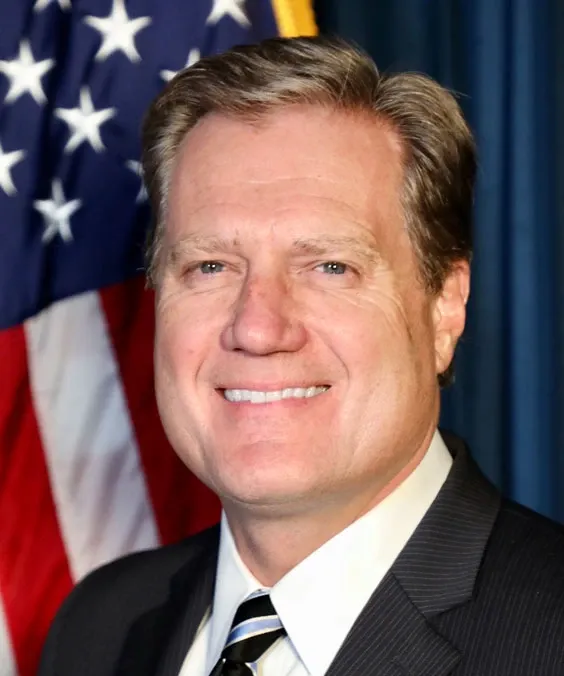
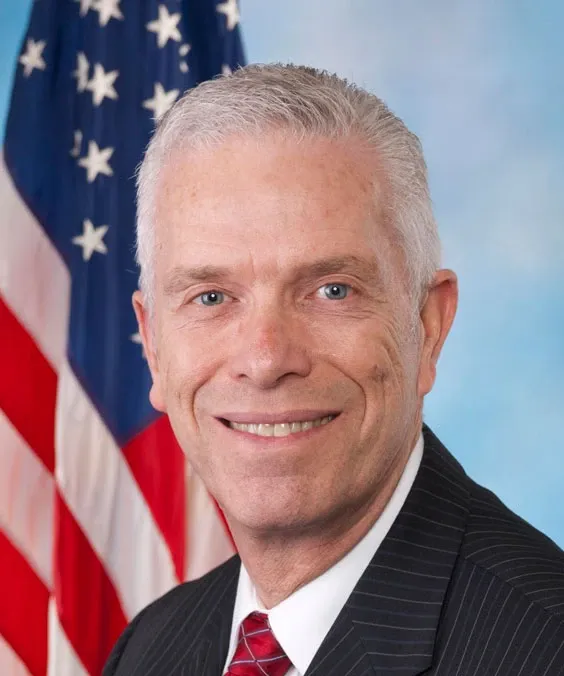
Jim Jordan
The Public Record
Jim Jordan is an American politician and attorney serving as the U.S. Representative for Ohio's 4th congressional district since 2007. A member of the Republican Party, he is known for his strong conservative stance and is a founding member of the House Freedom Caucus, which advocates for limited government and fiscal responsibility. Throughout his tenure, Jordan has been involved in various legislative efforts and has gained prominence for his role in high-profile investigations and oversight hearings.
Sep 14, 2011
The federal government spends about $500 billion every year through federal contracts, and it is with SBA's support and assistance small businesses receive nearly $100 billion of that spend.
Sep 14, 2011
The difference between quantifiably tracking these things which we are really trying to push on and setting goals in advance as Mr. Shear said is where some of the challenges
Sep 14, 2011
So when Congress passed the Small Business Jobs Act, which asked SBA to expand our 8(a) Mentor-Protege Program to include HUBZone-eligible firms, women-owned small businesses and service-disabled vets, we wanted to figure out that very…
Sep 14, 2011
In fiscal year 2010, small businesses won 22.7 percent of federal contracting dollars. This marks the second consecutive year of increase and the largest two-year increase in over a decade.
Sep 14, 2011
What we overwhelmingly heard is that it is a great opportunity to learn from somebody who has done this how to do it.
Sep 14, 2011
Yes, absolutely. So the exact split is something that we would be working through based on the implementation of the analysis we discussed but it would be to handle those oversight and fraud, waste, and abuse prevention functions.
Sep 14, 2011
Sure. Yes, as Mr. Shear says, we agreed with most, if not all of the recommendations in the GAO report.
Sep 14, 2011
We are always looking for ways to increase small business contracting opportunities, and I am proud to say that in the two and a half years I have been in my position, we have made significant and quantifiable improvements.
Sep 14, 2011
Our top priority at SBA is to maximize opportunities for small businesses and ensure that the benefits of our programs flow to the intended recipients.
Sep 12, 2011
One of the thing we thought this debt ceiling debate made sense was a proposal we put forward we thought was starting to break through with the American.
Sep 12, 2011
If these tax loopholes were so bad, so terrible, so needed, why didn't the previous Congress just 10 months ago take care of them then?
Sep 12, 2011
We don't pay our bills by going deeper into debt. That is avoiding paying our bills and guaranteeing eventual default.
Sep 12, 2011
I would argue Standard & Poor's downgraded us because the lack of the deal, the agreement addressing how serious this situation is.
Sep 12, 2011
Think about what the deal was, a $14 trillion debt; we raise it $2.4 trillion; we got $21 billion in savings the first year.
Sep 12, 2011
Nevertheless, it is the first time in 70 years the U.S. bond rating was downgraded.
Sep 12, 2011
Even though Congress said taxes were going to remain the same, no, the President is sending a completely different message.
Sep 12, 2011
The one word I have heard more than anything else over the last 3 years relative to our economic situation and the lack of growth is uncertainty.
Sep 12, 2011
I hate being an employer because of all the stuff you make us do, and he pointed right at me, talking about government.
Sep 12, 2011
Instead of rushing to pass additional spending, we need to ensure that any new legislation is carefully crafted and actually facilitates job creation.
Sep 12, 2011
If big government spending was going to get us out of this mess, for goodness sakes, we should have been out of it a long time ago.
Sep 12, 2011
No matter how you look at the stimulus, it has simply failed to live up to the administration's promises.
Politicians like Jim Jordan