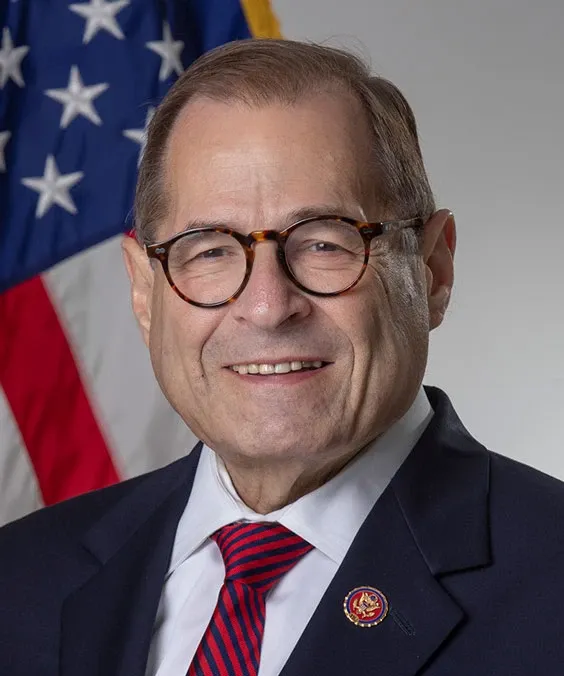
Mar 9, 2011
I fail to see the objectives of this hearing other than to further stigmatize and ostracize a community from whom we desire cooperation.
The Public Record
Yvette Diane Clarke is a member of the United States House of Representatives, representing New York's 9th congressional district since 2007. A member of the Democratic Party, she has focused on issues such as healthcare, education, and civil rights throughout her tenure. Clarke has been an advocate for affordable housing and has worked on initiatives to improve the quality of life for her constituents in Brooklyn. She is known for her commitment to social justice and community development.
I fail to see the objectives of this hearing other than to further stigmatize and ostracize a community from whom we desire cooperation.
I am really concerned that Chairman King has decided to look at the issue of home-grown terrorism through a myopic lens that has directed its focus on one religious community, Muslim-Americans.
Let me say that today's hearing has been a great Congressional theater, certainly the equivalent of reality television.
Just in closing, Madam Secretary under the continuing resolution, the DNDO would lose at least $20 million for acquisition this fiscal year.
Yes, I think that is an area of concern that both sides delay the radar for whatever reasons.
Without commenting further on the amendment that was passed, again, nobody will escape unscathed if that budget remains the budget.
Do you think this restriction will impact your Department's ability to protect urban areas?
In my opinion I believe that that sector warrants a Tier 2 consideration rather than the current Tier 1 status.
But we agree with you that a large gap still exists in chemical security due to the exemption of drinking water, wastewater, and port facilities and that this gap must be closed.
Both of us in this hearing room right now are much safer from chemical terrorism or accidental chemical release due to the actions of DC Water in removing gaseous chlorine from the Blue Plains facility.
Even though our respective roles have been changed and the scope and membership of the subcommittee has changed as well, I know that one thing will not change is our effective working relationship and our shared commitment to put…
Right across the Hudson River stands a collection of refinery, chemical facilities between Newark Airport and Port Elizabeth that has been referred to by terrorism experts as the most dangerous 2 miles in America because a major release of…
The security of our Nation's chemical facilities is an important topic for this committee and this subcommittee, and I thank you for holding this hearing.
Mr. Speaker, I urge my colleagues to support this important Homeland Security legislation. This legislation authorizes a program that has been very instrumental in keeping the City of New York and its environs safe, and that is securing…
Studies by the nation's leading criminal justice researchers have shown that ATIs reduce jail time and successfully treat people in the community without compromising public safety.
The program provides a cost-effective, responsible alternative to expensive and ineffective incarceration, saving taxpayers more than $17 million last year alone.
The program provides alternatives to incarceration for substance abuse offenders throughout New York City's metropolitan area.
It is not just necessarily about the ethnicity or the person's language barriers, but it has to do with a comprehensive look at all of the contributions that the diversity of our Nation makes.
There is great concern in minority communities, in particular, that once this happens, the already low minority high school graduation rate will plummet even further.
It is certainly my honor and my privilege to be here to both be a witness and to speak on behalf of Ms. Jacqueline A. Berrien.
It has really become a very serious problem out there for many Americans who are traveling of Muslim descent, Asian, South Asian, Middle Eastern, Caribbean, Irish American, children.
Earlier this session, the House unanimously passed H.R. 559, which is what we call the Fast Redress Act of 2009.
I want to also take a moment to commend Mayor Michael Bloomberg, our deputy mayor, Linda Gibbs, and our health commissioner, Tom Frieden, for their response, work, vigilance, and keeping New Yorkers informed and safe.
In addition to being a member of this committee I am also chair of the Subcommittee on Emerging Threats, Cyber Security, and Science and Technology for the House Committee on Homeland Security.
Politicians like Yvette Clarke