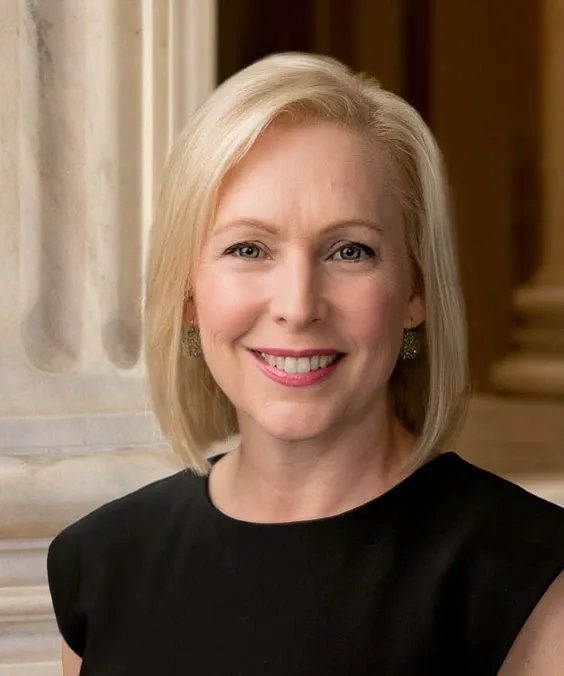
Sonia Sotomayor
The Public Record
Sonia Sotomayor is an Associate Justice of the Supreme Court of the United States, having been nominated by President Barack Obama in 2009. She is the first Hispanic and Latina member of the Court. Sotomayor previously served as a judge on the U.S. Court of Appeals for the Second Circuit and as a district court judge for the Southern District of New York. Her judicial philosophy often emphasizes the importance of empathy and the impact of the law on the lives of individuals, particularly marginalized communities.
May 7, 2009
Intrusions by a judge upon the functions of other branches of government should only be done as a last resort and limitedly.
May 7, 2009
I do not believe that judges should use their personal feelings, beliefs, or value systems or make their--to influence their outcomes.
May 7, 2009
No, that's not the role of the courts. The role of the courts is to interpret the law as Congress writes it.
May 7, 2009
I will not use foreign law to interpret the Constitution or American statutes.
May 7, 2009
It does appear that the Supreme Court's docket has lessened over time, its decisions that it's addressing.
May 7, 2009
What choices do you think about in terms of what Congress will do, what politicians will do.
May 7, 2009
In the end, I would tell your constituents, Senators, look at my record and understand that my record talks about who I am as a person, what I believe in, and my judgment and my opinion, that following the rule of law is the foundation of…
May 7, 2009
It must be applied, as is all the court's existing precedents that have not been rejected by the court.
May 7, 2009
I can assure your constituents that I have a completely open mind on this question.
May 7, 2009
I sustained--well, I rejected the challenges of the defendant that the application of the death penalty to him was based on race, yes.
May 7, 2009
If I were confirmed for the--to the court, it would be the first case that I would participate in.
May 7, 2009
As a judge I don't make policy. I don't make the policy choices for Congress.
May 7, 2009
International law and foreign law will be very important in the discussion of how we think about unsettled issues in our own legal system.
May 7, 2009
To the extent that my words have led some to believe that I think a particular group has--has--is better than another in reaching a decision based on their experiences, my rhetorical device failed.
May 7, 2009
I think that it's one of the reasons that every President in the last two--or say 20 years, 25 years, has attempted to promote diversity on a basic understanding that our society is enriched by its confidence that our legal system…
May 7, 2009
I don't like characterizing the reasons for why Congress acts or doesn't act.
May 7, 2009
It contains, as has been recognized by the courts for over 90 years, certain rights under the liberty provision of the Due Process Clause, that extend to the right to privacy in certain situations.
May 7, 2009
I think that most lawyers who participate in argument before me know how engaged I become in their arguments and trying to understand them.
May 7, 2009
The role of the court is never to make the policy. It is to wait until Congress acts.
May 7, 2009
I do understand the importance to Congress' factual findings, that my cases and my approach in my cases reflect that.
May 7, 2009
The history of a particular holding of the Court and how the Court has dealt with it in subsequent cases would be among one of the factors.
Politicians like Sonia Sotomayor