Dec 7, 2009
I would hate to see us completely eviscerate a State's rights to impose punishment.
The Public Record
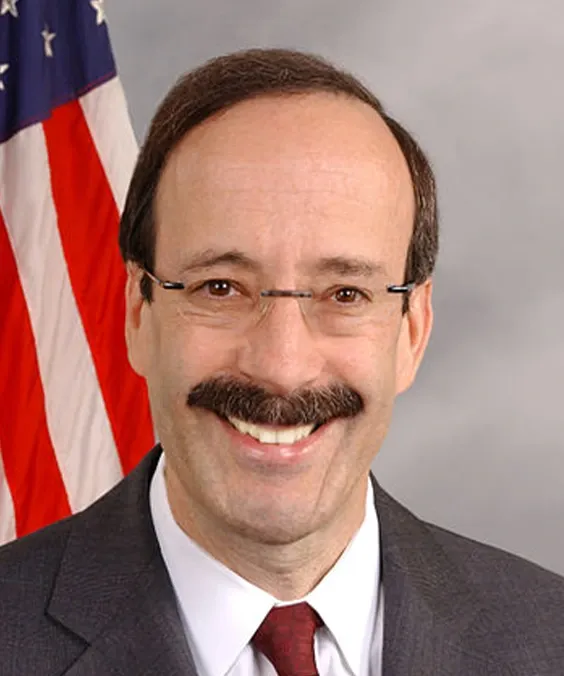
Jerrold Lewis Nadler is an American politician serving as the U.S. Representative for New York's 10th congressional district since 2013. A member of the Democratic Party, he previously represented New York's 8th congressional district from 1992 to 2013. Throughout his tenure, Nadler has been known for his work on issues related to civil rights, judiciary matters, and government oversight. He has played a significant role in various legislative efforts and has been an outspoken advocate for progressive policies.
I would hate to see us completely eviscerate a State's rights to impose punishment.
Wouldn't it be better, instead of wasting a lot of time, money, and effort as to whether the procedures were followed properly, to get to the heart of the matter on the merits?
I thank Chairman Nadler for holding this important hearing and for his indispensable assistance in helping to develop H.R. 3986.
This bill will fix the law as it stands to protect innocent Americans from execution.
I believe we should revisit the restrictions placed on the habeas petitions of death row inmates in the Antiterrorism and Effective Death Penalty Act of 1996.
This is not only unacceptable, but it undermines the very integrity of our criminal justice system.
We need to pass the 'Effective Death Penalty Appeals Act,' and quickly, before another potentially innocent American is executed.
The writ of habeas corpus is one of the most fundamental safeguards in our Constitution to prevent the imprisonment and execution of innocent people.
We are laying the groundwork for comprehensive reform of Federal habeas corpus.
We're going to be looking at all the sections of the PATRIOT Act as we look at this.
Saying that we shouldn't change something because Congress did it is never a good argument, because we are always changing something.
I don't think unlimited access is a right. It may be consonant with safety, it may not be.
It is tragic and absolutely unacceptable that it took nine deaths to produce this belated concession on the matter of clear law.
We cannot have such a doctrine and yet also have indefinite detention, because that means detention to the end of time.
The voluntariness standard, which is a due-process-based standard, is the appropriate standard.
The Administration supports the Senate amendment that would ban statements obtained through cruel, inhuman or degrading interrogation methods.
This seems reasonable and important--in fact, crucial--to assuring a fair process.
We do want it quickly. We are going to be debating the military commissions reform presumably in the context of the conference report on the DOD authorization bill which has now passed both houses.
We will continue to have to intercept and detain individuals who have attacked us or who threaten us.
Today the Subcommittee--and let me, before I do the opening statement, I apologize for everyone here, including the witnesses, for the fact that this is almost 2 hours getting--late getting started, but that was unavoidably, as you know…
The Canadian Parliament voted a 10 million, I think it was, dollar indemnity--for their--part in the injustice done to him
I hope you consider it quickly before the conference convenes, which may be soon.
But we are not a police state. In order to imprison anyone, we must have sufficient evidence to do so.
Politicians like Jerry Nadler