Michelle Lujan Grisham
The Public Record
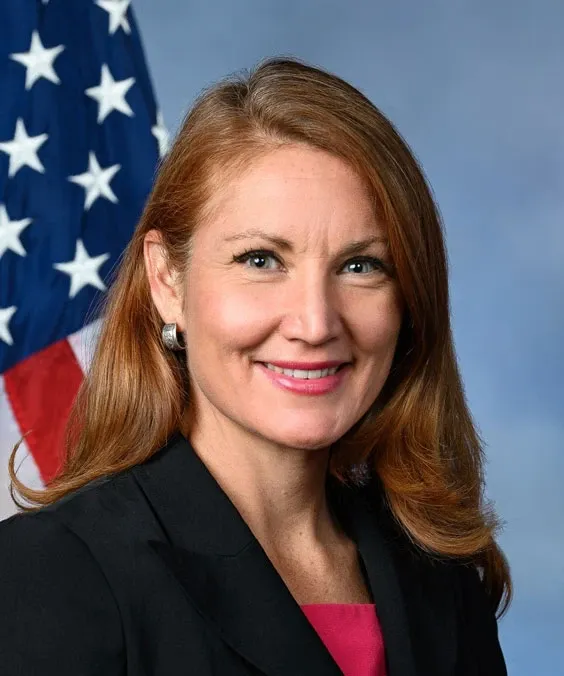
Michelle Lujan Grisham is the 32nd governor of New Mexico, having taken office on January 1, 2019. A member of the Democratic Party, she previously served as a U.S. Representative for New Mexico's 1st congressional district from 2013 to 2019. As governor, Lujan Grisham has focused on issues such as healthcare, education, and economic development, advocating for policies aimed at improving the quality of life for New Mexicans. She has also addressed public safety concerns, including drug-related issues and human trafficking in the state.
Jun 6, 2017
I am interested in your opinions about comprehensive immigration reform, which, particularly in a state like mine, provides an immediate return into the pocketbooks of every New Mexican.
Jun 6, 2017
The strategy that we have taken in New Mexico... is to invest in huge tax breaks at the top 1 percent and corporate tax breaks.
Jun 6, 2017
New Mexico has the highest unemployment in the country, and we are not... seeing real, or any quite frankly, economic growth.
May 23, 2017
Twenty percent of New Mexicans live in poverty, 28 percent of New Mexico children live in poverty, second highest in the Nation.
May 23, 2017
If with a want to have kind of a Cadillac growth in the economy and GDP, you want that and you want to get kind of a balanced perspective about who thinks that can happen, do comprehensive immigration reform.
May 23, 2017
Ten years ago we had a 3.7 unemployment rate. Today, we have the highest unemployment rate in the Nation at 6.7 percent.
May 16, 2017
I would love a partnership to say we are not going to stand for that as a country.
May 16, 2017
I introduced a bill in Congress with my colleague and good friend, the Chairman of the Biotech Subcommittee, Rodney Davis.
May 16, 2017
New Mexico is the first state in the country to now ban lunch shaming at a state level.
Mar 15, 2017
While the lack of needed immigration policy reform is the greatest overarching current threat to America's specialty crop sector, the programs I just mentioned are also critical to addressing other important needs for fruit and vegetable…
Mar 8, 2017
Thank you Chairman Davis and Ranking Member Lujan Grisham for the opportunity to provide supplemental comments for the record of the March 9 hearing.
Mar 8, 2017
What can we do to help you? What is your team doing to ensure that families of these soldiers and airmen...
Mar 8, 2017
I commend people who decide to continue in the Reserves after their discharge.
Mar 8, 2017
Without accurate data, we have no way of assessing and reducing radiation exposure health risks, including acute radiation sickness and cancer.
Mar 8, 2017
Funding and fielding the items in fiscal year 2018 improves Army readiness, stabilizes the industrial base, and most importantly, protects the safety and welfare of our Nation's soldiers.
Mar 8, 2017
It is critical that we provide our men and women with not only the information related to these exposures, but the opportunity to mitigate those and deal with issues for their entire families.
Mar 8, 2017
The new system meets the Department of Defense standards and includes a personal dosimeter, which resembles a wristwatch.
Mar 8, 2017
This program is critical to the security, safety, and well-being of American servicemembers who are exposed to radioactive weapons systems, devices, and materials on a daily basis.
Politicians like Michelle Lujan Grisham