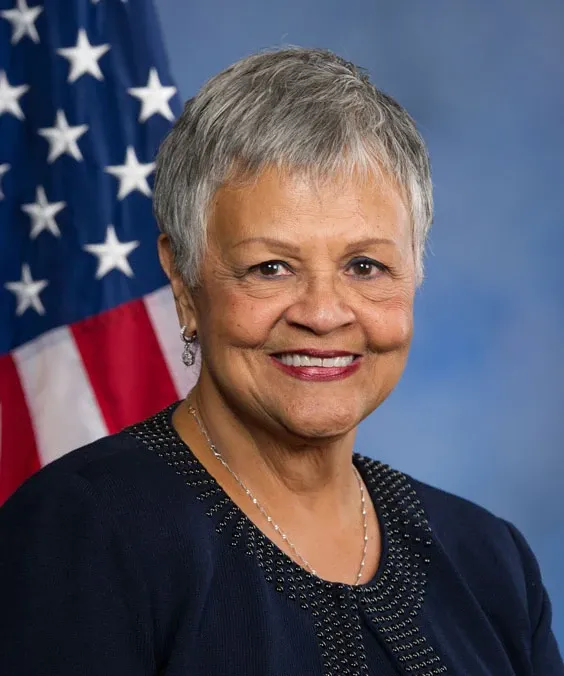
At last peoples have become conscious of their relations to the highest powers of the State, and have sought to give permanence and certainty to those relations by setting the conditions of their subordination fast in stubborn practices or…
Woodrow Wilson
The Public Record
Woodrow Wilson was the 28th President of the United States, serving from 1913 to 1921. A member of the Democratic Party, he was born in Virginia and raised in Georgia before moving to New Jersey, where he became a prominent political figure. Wilson was a key leader of the Progressive Movement, advocating for reforms such as antitrust legislation and the establishment of the Federal Reserve System. His presidency is also noted for significant events such as the United States' involvement in World War I and his efforts to promote the League of Nations, an international organization aimed at preventing future conflicts.
gutenberg.org
Sovereignty has at all times and under all systems of government been dependent upon the temper and disposition of the people.
The will of the community, the inclinations and desires of the body politic as a whole, are always, in the last analysis, the foundation, as they are also in many instances the direct and immediate source, of law.
A written constitution adopted by popular vote affords, perhaps, some of the nicest tests of theory.
In such a document the powers of the government are explicitly set forth and specifically lodged; and the means by which they may be differently constituted or bestowed are definitively determined.
It is easy, as it is also impressive, to believe that a written constitution proceeds from the people, and constitutes their sovereign behest concerning government.
When despotism in France was ‘tempered by epigram,’ the sharp tongues of the wits spoke, after a sort, the constitution of the country,--a positive law whose sanction was ridicule.
Our written constitutions are only very formal statements of the standards to which the people, upon whom government depends for support, will hold those who exercise the sovereign power.
Ultimately they condition the action of those who govern; and it is salutary that it should be so.
It is wise also, if it be not indispensable, that the extent and manner of their control should be explicitly set forth and definitively agreed upon in documents of unmistakable tenor.
If it seem to be after all a question of words, a little closer scrutiny will disclose the fact that it is much more than that.
Sovereignty is something quite definite; so also is power; so also is control.
Sovereignty is the highest political power in the state, lodged in active organs, for the purposes of governing.
Power belongs to government, is lodged in organs of initiative; control belongs to the community, is lodged with the voters.
To call these two things by the same name is simply to impoverish language by making one word serve for a variety of meanings.
On the whole, however, it is always safe to ascribe sovereignty to the highest originative or law-making body of the state,--the body by whose determinations both the tasks to be carried out by the Administration and the rules to be…
Even where the courts utter authoritative interpretations of what we call the fundamental law--the law that is embodied in constitutions--they are rather the organs through which the limitations of sovereignty are determined than organs of…
As for the Executive, that is the agent, not the organ, of sovereignty.
It is their function to direct, to lead, rather than to command.
They originate forms, but they do not discover principles.
In a very profound sense law proceeds from the community.
This is the only sort of sovereignty that can be exercised in human affairs.
But the pilot is sovereign, and not the weather.
Everything apprises us of the fact that we are not the same nation now that we were when the government was formed.
In looking back to that time, the impression is inevitable that we started with sundry wrong ideas about ourselves.
Politicians like Woodrow Wilson