Jul 31, 2017
Unless we act, costs could rise once again making healthcare unaffordable for the additional 9 million Americans in the individual market who receive no Government support.
The Public Record
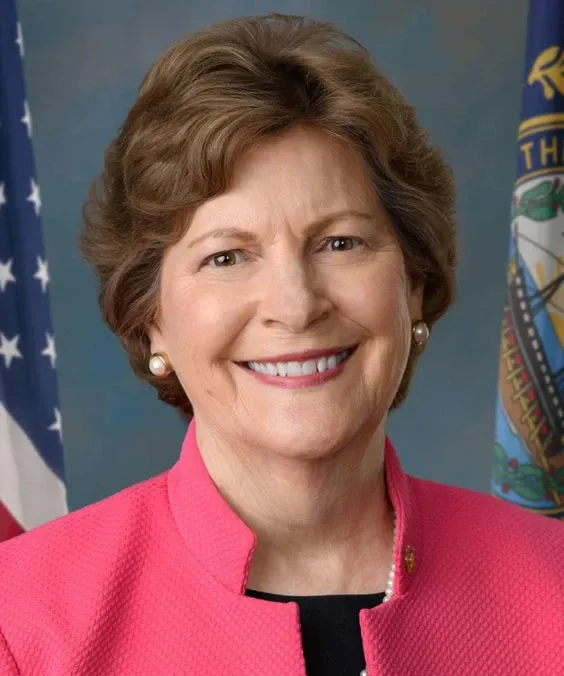
Maggie Hassan is an American politician serving as the junior United States senator from New Hampshire since January 3, 2017. A member of the Democratic Party, she previously held the position of the 81st governor of New Hampshire from January 3, 2013, to January 5, 2017. During her tenure as governor, Hassan focused on expanding access to healthcare, improving the state's economy, and addressing issues related to education and infrastructure.
Unless we act, costs could rise once again making healthcare unaffordable for the additional 9 million Americans in the individual market who receive no Government support.
Unless we act, many of them may not have policies available to buy in 2018 because insurance companies will pull out of collapsing markets.
If your house is on fire, you want to put out the fire, and the fire in this case is the individual health insurance market.
Unless Congress acts by September 27...millions of Americans with Government subsidies...may find themselves with zero options for buying health insurance.
I thank our leader, Senator Schumer, for his remarks. I join with Senator Schumer and all of our colleagues in wishing the very best to our tough and resilient American hero and colleague, John McCain. Our thoughts and prayers are with him…
I think that the legislation that authorized FirstNet got it right when they left the decision of opt-in or opt-out to our nation's Governors.
I applaud your efforts, truly a bipartisan initiative, to advance balanced spectrum policy.
I am really grateful for your efforts because you're really working to ensure that all across the country our students have access to quality broadband.
Since that initiative began in 2015, more than 25,000 of our students have received broadband access at school.
Thank you, Mr. Chair and Ranking Member, especially for allowing this hearing to go on this long so we all get a chance to ask questions.
Identifying licensed and unlicensed spectrum for greater use will not only ensure that we have the reliable services we are accustomed to, but it will also spur innovation.
I share many of my colleagues' concern that this administration has very little regard for this value.
If Browning-Ferris isn't the law, and you think it was wrongly decided, how can we protect the rights of workers now in this kind of fissured, fragmented workplace?
I'd suggest you might want to look at some of the literature, in particular, in certain industries like the construction industry, where the rate of misclassification is high.
If you're confirmed, what steps will you take as a Board member to curb this epidemic of misclassification?
Historically, working class families have been able to gain ground economically because of the advocacy of their unions.
Strategically done with good partnerships so that the educators understand the needs of the actual industry
The other program that has been very important in New Hampshire is our TAACCCT grant program
One of the things that some businesses in New Hampshire have been doing to this whole issue of line of sight is not only working to help young people understand the career pathway.
In New Hampshire, because of our low unemployment rate, we actually had significant reserves in our welfare fund.
We know that we need more government support for paid family leave and for childcare.
These programs in New Hampshire have demonstrated that at-risk individuals, when given the right supports, are capable of finding stable, good-paying employment.
As Governor of New Hampshire, now Senator, it is the number one thing I hear about from businesspeople and employers.
Politicians like Maggie Hassan