Mar 12, 2018
Senator Hassan and Senator Gardner's AIRWAVES Act is a central proposal for the future of our country in terms of spectrum policy.
The Public Record
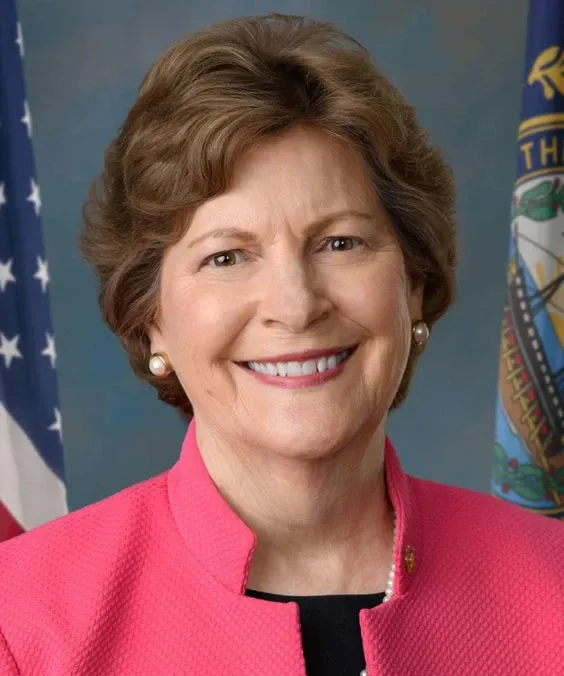
Maggie Hassan is an American politician serving as the junior United States senator from New Hampshire since January 3, 2017. A member of the Democratic Party, she previously held the position of the 81st governor of New Hampshire from January 3, 2013, to January 5, 2017. During her tenure as governor, Hassan focused on expanding access to healthcare, improving the state's economy, and addressing issues related to education and infrastructure.
Senator Hassan and Senator Gardner's AIRWAVES Act is a central proposal for the future of our country in terms of spectrum policy.
I commend Senators Gardner and Hassan for introducing S. 1682, the Advancing Innovation and Reinvigorating Widespread Access to Viable Electromagnetic Spectrum Act.
Congress must authorize this change in the auction process and encourage the FCC to auction all bands suitable for mobile broadband use as soon as possible.
I urge you to view local governments as strong partners in ensuring that broadband services are available to all Americans.
I keep her in mind all the time because, in fact, this is an illness that can be treated and people can have productive lives afterwards.
I think one of the things that is really important, as we talk about all the challenges that this epidemic brings, is for us also to focus on the fact that recovery is possible.
So while the $6 billion we secured in the bipartisan budget agreement is a start, we know that we ultimately need far more funding beyond this to truly address this crisis.
I believe that strategies to address the opioid epidemic need to be thoughtful. They need to be long-sighted and multifaceted.
We need resources on the front lines for health care professionals, to law enforcement, to treatment and recovery providers.
It is over a $500 billion epidemic impact in 2015 nationally in my home State of New Hampshire of 1.3 million people.
Today over 100 Americans will die from a drug overdose, most of that from opioids.
I come from a State that has about the third highest mortality rate from this epidemic.
We used to say to people, 'Go into business early. You don't have a mortgage yet.' Right? But if you have student debt at the level of a mortgage, you can't.
In February I introduced the Gateways To Career Act. It would address this challenge by supporting individuals engaged in career pathway programs.
So, again, is there a way that we can address safety concerns, but also not take these lines, which were exempted under the statute, out of service?
I think it is, especially because, as both of these witnesses answered, there is also treatment for sleep apnea.
The lack of Federal standards and testing requirements around this issue I think is reckless.
Predatory student loan providers remain a serious problem for American consumers.
It's a real example of the work that so many families are doing to try to prevent this from happening to anyone else.
We will ultimately need far more funding beyond this measure over the years to come to truly address this crisis.
These new dollars need to be prioritized for states like my own, New Hampshire, which has been terribly and disproportionately hit by this crisis.
Politicians like Maggie Hassan