Feb 26, 2014
I share Senator Levin's comments about the need to address sequestration and hopefully this committee can help lead the way.
The Public Record
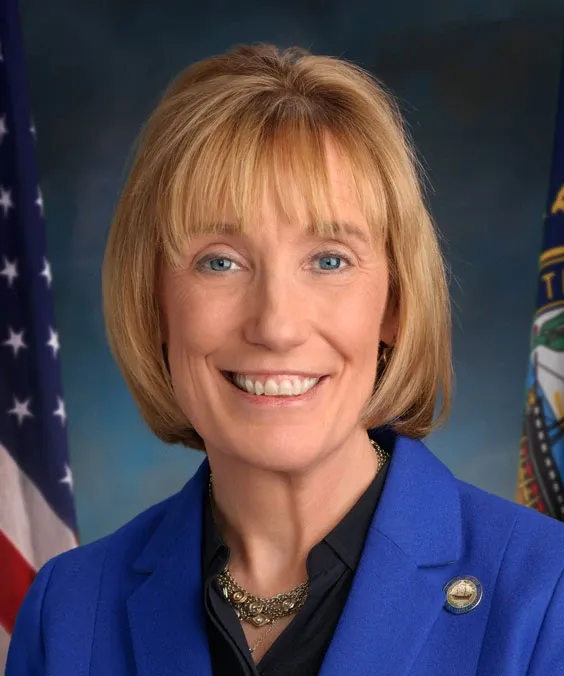
Jeanne Shaheen is an American politician serving as the senior United States senator from New Hampshire, a position she has held since January 3, 2009. A member of the Democratic Party, she is the first woman to be elected governor of New Hampshire, serving from 1997 to 2003. During her tenure in the Senate, Shaheen has focused on issues such as healthcare, education, and national security, often advocating for policies that support working families and promote economic growth.
I share Senator Levin's comments about the need to address sequestration and hopefully this committee can help lead the way.
Certainly I hope that we will see some action in the Senate and in Congress to address sequestration in the coming budget years.
I found it troubling that the military would go forward without working in conjunction with Congress.
I strongly disagree that another BRAC round is needed at this time, and I will not support one in the upcoming National Defense Authorization Act (NDAA).
I am sure it is true of others who represent the other shipyards in this country--are very proud of the good work of the folks who have been there for many years and are very concerned about our actions here to make sure that we continue…
China's significant advances in submarine technology and its continued production of ballistic missile submarines which will give China its first credible sea-based nuclear deterrent probably by the end of 2014.
I certainly hope that we will see action in this Senate and in Congress in the next few days, or at least in the next week, that will express bipartisan concern and send a very strong message to Putin and to Russia that the country is…
I am concerned that the underfunding of laboratory facilities has been a long-term trend that has resulted in degraded capabilities.
How do we codify the goals for energy savings in a way that means that they continue, if leadership changes?
I am a big proponent, having seen it work as Governor when we did buildings in New Hampshire.
Their immediate reaction was that it was a piece of crap, but then they realized how much it improved their mission, and then they embraced it.
I did a hearing in Norfolk a couple of years ago with demonstrations of various technologies that were being implemented out in the field in Afghanistan.
I have had the opportunity to tour the Portsmouth Naval Shipyard and see the energy savings there, and it is really very impressive
All the Services collaborate together on energy initiatives under Ms. Burke's leadership.
One of the things we are looking at is how many tons of cargo we can move per gallon of fuel.
I think one of the best stories that is untold is the work that is being done in the military to save energy and to produce new research that is going to benefit everybody in the private sector, as well in terms of energy savings.
I have been opposed to the cuts from sequestration that are putting additional pressure on DOD.
I am not going to go home to my constituents in New Hampshire and say I have authorized something when I do not have a good idea of where I think the outcome of that might be.
I think that is the interest on the part of all of us here, but if we do not have information on which to assess what is being proposed, it is really hard.
I assume that DOD does not have an interest in getting into a back and forth with Congress over taking action that Congress has not authorized in a way that would produce a backlash in Congress.
I assume the excess capacity analysis that you are doing now is going to be part of the European infrastructure consolidation review.
It is the whole metrics piece, how we model those assessments, the extent to which we are comfortable with what is in them.
Politicians like Jeanne Shaheen