Apr 5, 2016
Senator Tester has introduced two bills: S. 2304, the Tribal Early Childhood, Education, and Related Integration Act of 2015 and S. 2468, the Safe Academic Facilities and Environments for Tribal Youth Act.
The Public Record
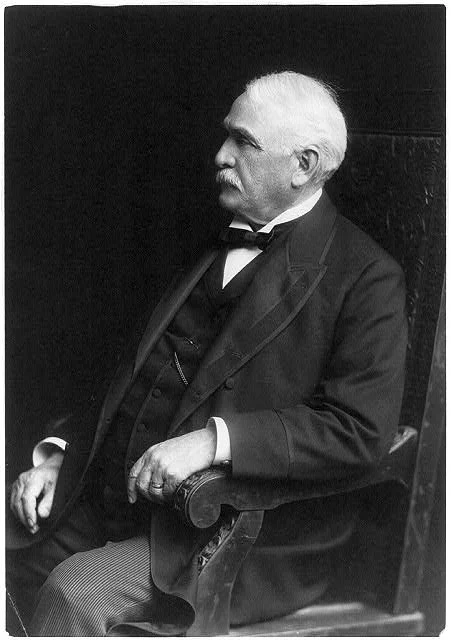
Jon Tester is an American politician serving as the senior United States senator from Montana since 2007. A member of the Democratic Party, he has focused on issues such as veterans' affairs, agriculture, and healthcare throughout his tenure. Tester, who was born on August 21, 1956, has been known for his bipartisan approach and commitment to representing the interests of Montanans in Congress. He has played a significant role in various legislative efforts, including those aimed at improving the lives of Native American communities and addressing rural issues.
Senator Tester has introduced two bills: S. 2304, the Tribal Early Childhood, Education, and Related Integration Act of 2015 and S. 2468, the Safe Academic Facilities and Environments for Tribal Youth Act.
I have introduced S. 2580, the Reforming American Indian Standards for Education Act of 2016, otherwise known as the RAISE Act.
The National Indian Impacted Schools Association (NIISA) enthusiastically endorses S. 2468, the 'Safe Academic Facilities and Environments for Tribal Youth Act' or SAFETY Act.
It speaks well of your tribal leadership, I will tell you that. It also speaks well of the fact you guys are prioritizing education at SKC and that is the key to breaking the cycle of poverty, in my opinion.
NIEA appreciates Senator Tester's innovative proposal to support construction efforts for tribal schools through a demonstration program.
Senator McCain has introduced S. 2711, the Native American Education Opportunity Act.
I want to express my appreciation for you holding this legislative hearing focusing on Indian education legislation.
Fifty million? And if you are doing 1.5 million a year, where are you at now? Are you at 10 million, 15, 20?
The fact is that if we are going to continue to grow our outdoor economy, those trails are pretty damn important.
I personally live 100 miles south of the Canadian line. Do we have low-flying radar on that Canadian line right now?
So we spend a lot of money on security, and we should spend a lot of money on security, because we need to keep our citizens secure, but this seems like a no-brainer.
I can tell you, and you correct me and I will correct it for the record, I do not think we do.
It is a top priority of mine to ensure that those who have served our country are able to effectively transition to civilian life.
I strongly believe that agriculture can provide significant opportunities for vets who bring invaluable leadership and knowledge to the workforce.
So, this hearing is about jobs, it is about the economy, it is about honoring our commitment to veterans, and it is about making rural America all it can be while the veterans make this country all it can be.
The U.S. Supreme Court has, on three occasions, confirmed this principle through rulings in Cherokee Nation et al. v. Leavitt, Salazar v. Ramah Navajo Chapter, and Arctic Slope Native Association v. Sebelius.
Failure to fully fund these costs impedes our ability to meet the tribal health care needs and the other needs of Cherokee citizens.
Politicians like Jon Tester