May 16, 2022
I think there is some discussion where they may graduate in some way to where they continue to exist.
The Public Record
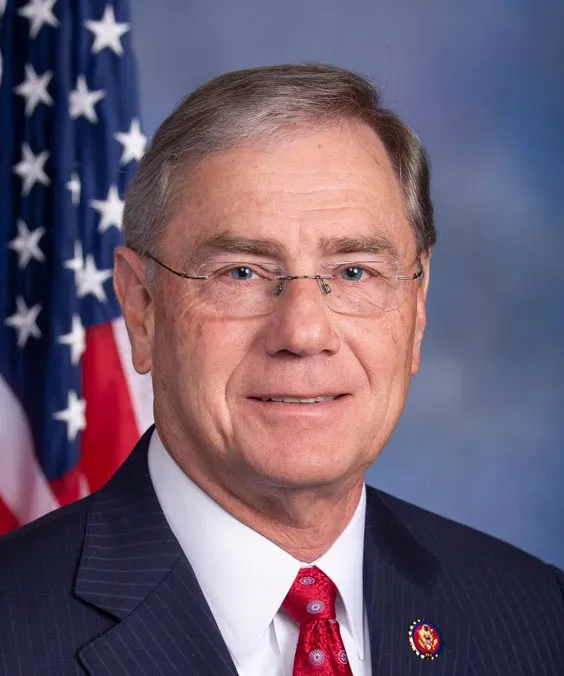
Roy Blunt is an American politician currently serving as the senior United States senator from Missouri, a position he has held since January 2011. A member of the Republican Party, Blunt previously served as a United States Representative from 1997 to 2011. Throughout his career, he has focused on various issues including public health, research funding, and bipartisan cooperation in Congress.
I think there is some discussion where they may graduate in some way to where they continue to exist.
If there is one lesson to be learned from the COVID-19 pandemic, it is that our Nation's success depends on medical research infrastructure.
Now is not the time to abandon that goal, now is the time, in fact, to make it even stronger.
I am a supporter of ARPA-H, I am a supporter of the Secretary's decision to have it associated with NIH.
I am disappointed that this budget request reduces funding for 12 of the 27 institutes, including the National Cancer Institute.
One of my proudest accomplishments is realigning the priorities within the Labor/HHS bill to focus on medical research.
I appreciate the work we have done together. As you said, this is in my, in all likelihood, last NIH hearing.
I think encouragement to USAID from the Senate in the House to move these funds quickly.
I think the Javelin's probably closer to 18 to 24 months and the Stinger missiles, we haven't bought a Stinger missile, according to the CEO of Raytheon, for 18 years.
We need you to do that. And it will impact the budget to the extent that we need to know where that funding comes from.
I was pleased in the budget that you have shown--asked for a substantial increase in the certified community behavioral health clinics.
The concern at NIH about ARPA-H--or the NIH advocates, not necessarily the people working there, but the support groups and advocates of NIH, has always been that it would take money that otherwise would go to NIH.
So Senator Murray and I have worked together on this committee for 7 years, and have increased the NIH funding by more than 50 percent after a decade with no real increase.
We served together in the House, but I think in the last year we have had a chance for our relationship to grow and I am grateful that that has happened.
Thank you, Chair Murray. I appreciate Secretary Becerra being here today to discuss the Administration's fiscal year 2023 budget request.
I hope we can set aside our partisan difficulties, as we did last year in this committee, and support programs like maternal mortality programs that benefit all Americans.
For a long time one of the oldest and most successful conservation commissions in the country was funded just by hunting and fishing licenses.
I look forward to seeing this bill on the floor sometime between now and the end of this year, hopefully even between now and the end of the fiscal year.
Through his commitment to seeing our patients as people he can help, Senator Blunt's longstanding promise of expanding the reach and resources of the Nation's Registry has saved thousands of lives.
These increases have helped the NIH regain ground from the years of largely flat funding in inflation-adjusted dollars.
It is wrong for the Federal Government to dictate what that workforce should look like, and for bureaucrats in Washington to determine the speed in which we get there, that should be left up to States, and communities, and local economies.
I look forward to working with you to strengthen our Nation's workforce, and create a more prosperous economy for all Americans.
I want to say to that, Secretary, there is a reason that we had the veterans set aside in some of these areas.
I think it is really important that people certainly, in high school, begin to get a sense of what jobs are out there.
Politicians like Roy Blunt