Feb 29, 2016
Thank you, Chairman Goodlatte. And welcome, again, to our forum here, a very regular visitor to the Judiciary Committee.
The Public Record
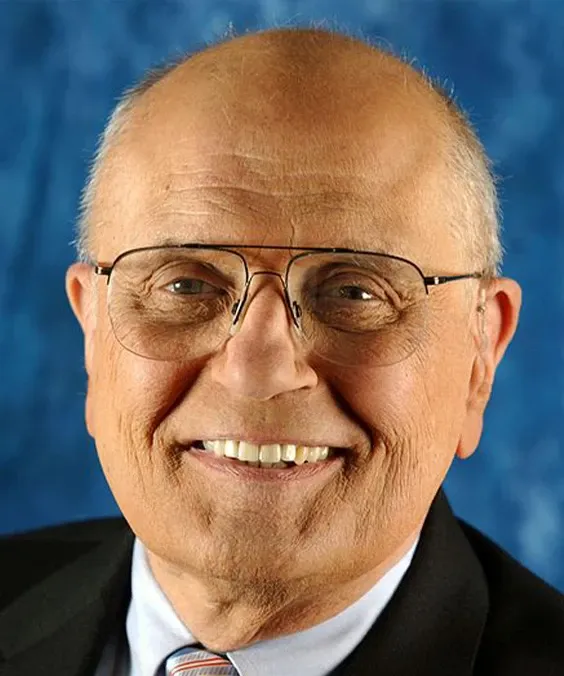
John Conyers was a prominent American politician who served as a U.S. Representative from Michigan from 1965 until 2017. A member of the Democratic Party, he was one of the founding members of the Congressional Black Caucus and played a significant role in advocating for civil rights and social justice throughout his career. Conyers was known for his commitment to issues such as healthcare, education, and labor rights, and he introduced legislation aimed at improving the lives of his constituents and marginalized communities across the nation.
Thank you, Chairman Goodlatte. And welcome, again, to our forum here, a very regular visitor to the Judiciary Committee.
The fifth thing I believe is that democracies resolve these kind of really hard questions through robust debate.
This Committee, and not the courts, is the appropriate place to consider those consequences.
The government's assertion of power is without limiting principle, and likely to have sweeping consequences.
I fear that pursuing this serious and complex issue through the awkward use of an inept statute was not, and is not, the best course of action, and I'm not alone in this view.
I'm deeply concerned by this cynical mind-set, and I would be deeply disappointed if it turns out that the government is found to be exploiting a national tragedy to pursue a change in the law.
Somehow the gentleman from Virginia has misunderstood what I said or has mischaracterized what I said. This bill makes it too difficult to remand cases back to State courts to the point at which federalism concerns are raised and…
In the case pending before the Second Circuit right now, the Department of Justice and Microsoft differ on the application of the law to data stored on servers outside the United States.
The mutual legal assistance treaty system was written for a different era, and struggles to keep pace with the scope and pace of modern communications.
I am also a co-sponsor of H.R. 1174, the 'Law Enforcement Access to Data Stored Abroad Act.'
The Honorable John Conyers, Jr., a Representative in Congress from the State of Michigan, and Ranking Member, Committee on the Judiciary
Now, we have a situation here where, Mr. Colucci, The Wall Street Journal estimates that 80 percent of all EB-5 projects need gerrymandering to qualify as high unemployment targeted employment areas.
Thank you, Chairman Goodlatte. And I appreciate the testimony, the varied testimony from our four witnesses.
Steering investments to projects in our cities' wealthiest neighborhoods at the expense of urban and rural communities that need it most is not what Congress intended when it established targeted employment areas and the lower investment…
However, as reported by The Wall Street Journal, as well as many other news sources, the vast majority of EB-5 investment funds are going to projects in some of America's most affluent areas that qualify as targeted employment areas only…
I believe the EB-5 program can have a positive effect on distressed urban and rural communities by providing a source of jobs and investment.
Members of Congress, like Ranking Member Conyers, actually voted against the law, because those specific exemptions were not included.
It contains no exceptions for journalists, researchers, human rights investigators, or other professionals.
The Executive should implement that law according to the will and intent of the Congress.
I cannot overstate how serious I believe this issue is, as a separate, but equal, branch of the Government.
This crisis is humanitarian in nature, and not just a border security problem.
I was proud to have voted for the Affordable Care Act and proud to vote 62 times not to go into the political demagoguery of trying to repeal what is one of our Nation's best efforts at joining the rest of the industrialized and civilized…
Politicians like John Conyers