Dec 18, 2012
I am pleased to recognize the ranking member of our Intellectual Property Subcommittee, Mel Watt of North Carolina. I yield him as much time as he may consume.
The Public Record
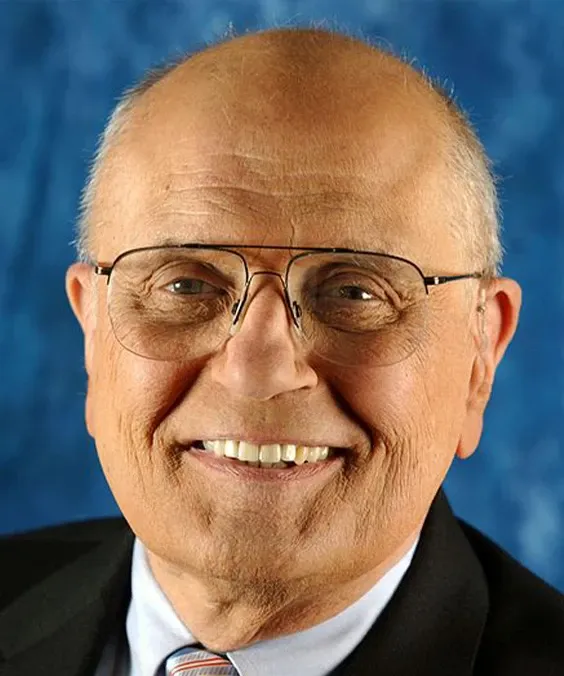
John Conyers was a prominent American politician who served as a U.S. Representative from Michigan from 1965 until 2017. A member of the Democratic Party, he was one of the founding members of the Congressional Black Caucus and played a significant role in advocating for civil rights and social justice throughout his career. Conyers was known for his commitment to issues such as healthcare, education, and labor rights, and he introduced legislation aimed at improving the lives of his constituents and marginalized communities across the nation.
I am pleased to recognize the ranking member of our Intellectual Property Subcommittee, Mel Watt of North Carolina. I yield him as much time as he may consume.
We have no further requests for time, and I yield back the balance of my time.
Before I yield to the distinguished gentlelady from Texas, I would like to observe the great relationship that has been formed on Judiciary between myself and the distinguished gentleman from San Antonio, Texas. For 4 years he was the…
I am pleased to yield our remaining time to the gentleman from Illinois (Mr. Gutierrez).
We're prepared to close on this side, if the gentleman on the other side is ready.
I am pleased to yield 3 minutes to the gentleman from Virginia (Mr. Connolly). {time} 1020
I am pleased to yield 30 seconds to the gentlelady from California (Ms. Zoe Lofgren).
I'm pleased to yield 3 minutes to the gentleman from New York, who's worked on this issue, Congressman Jose Serrano.
No one's worked harder on this issue than Mr. Gutierrez, the gentleman from Illinois; and I am pleased to yield him 3 minutes.
I now yield 5 minutes to a senior member of the House Judiciary Committee, the gentlewoman from Texas (Ms. Jackson Lee).
I'm pleased to yield 30 seconds to the gentlewoman from California (Ms. Lofgren).
I am pleased now to yield 5 minutes to the ranking member of the Immigration Subcommittee, who represents the place where many of these techs come from, Silicon Valley, Ms. Zoe Lofgren.
I am concerned that H.R. 6480, the 'Internet Radio Fairness Act,' may not actually improve the current system and that it could result in artists receiving less compensation.
I am still trying to determine why artists and performers, whose music is played 24 hours a day on terrestrial radio, don't get a dime.
Here we have the leading supporter of this bill, a publicly traded company valued at $1.4 billion at the end of last month, essentially urging that we consider a measure that would cut royalties and deprive artists of the fair market value…
What's the basic issue that brings us here today? Well, it's the fairness issue in terms of people being rewarded for their skill and talent, musicians and singers across all musical genres.
This isn't the first time I've persuaded the Committee to redraft the title.
A more appropriate title might be the Paycheck Reduction Act, because what we're doing here is lowering the royalties that Internet webcasters would pay to artists by more than 85 percent.
I'm pleased to yield 1\1/2\ minutes to the very patient Member from Texas (Mr. Hinojosa).
I would like to gain the previous speaker's attention. The House, of which you are a Member, passed the DREAM Act 216-208, and we enjoyed the support of eight Republican Members. Mr. Speaker, I now yield 1\1/2\ minutes to a senior member…
I am pleased now to yield 2 minutes to the former chairman of the Education and Labor Committee, the distinguished gentleman from California, George Miller.
I am pleased to yield 1 minute to Judy Chu, an active member of the Judiciary Committee who, additionally, heads the Asian Pacific Caucus.
I would now proudly yield 3 minutes to our distinguished whip, the gentleman from Maryland (Mr. Hoyer).
It is with great pleasure that I thank the gentlelady from California (Ms. Lofgren) and yield her such time as she may consume.
Politicians like John Conyers