Feb 14, 2018
I would argue that the United States should take a leading role in pursuing strict enforcement of the IAEA agreement.
The Public Record
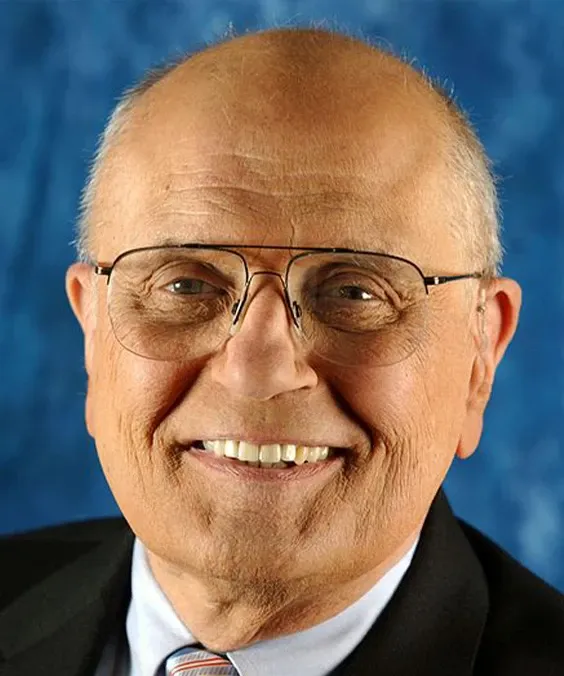
Gary Charles Peters is an American politician serving as the junior United States Senator from Michigan since January 6, 2015. A member of the Democratic Party, Peters previously represented Michigan's 14th congressional district in the U.S. House of Representatives from January 3, 2013, to January 6, 2015. Throughout his career, he has focused on issues such as economic development, healthcare, and education reform. Peters has been an advocate for bipartisan cooperation in Congress, emphasizing the need for compromise among lawmakers to address pressing national issues.
I would argue that the United States should take a leading role in pursuing strict enforcement of the IAEA agreement.
It is essential that we have secure and reliable command and control in place prior to new weapons.
I view that with concern. I mean, there is a possibility that, in 2049, the centennial of the Modern People's Republic of China, Xi Jinping could be the president then.
I have been concerned about some of the rhetoric we have seen from the President in relation to Muslims and African nations, including using some very disparaging language in reference to African nations.
I was very concerned about ISIS-West Africa, which you mentioned is basically a splinter group from Boko Haram.
We have to continue to focus on the values and--you know, the values that democracies profess--democratic institutions, international rule of law.
When I use the term 'political warfare,' this--they are engaged in political warfare with the West, generally, as a result of these activities, in trying to sow this distrust, which undermines any of the--the fundamental basis of democracy…
I think we need to think about it more broadly, about the national security challenges of foreign investment.
CFIUS, to me, is a reflection of an environment of the past, not today in the future.
I'm working right now in trying to fill some of the gaps on the CFIUS process.
I am personally concerned that the orbital debris regulatory landscape is already extremely complicated.
But needless to say, space situational awareness or space traffic management is going to become far more complicated in the upcoming years.
The taxpayers have a right to know whether that money has actually made us safer or not.
The challenge is making sure that we are hardening the weakest link because the bad guys are always looking for the weakest link
We do not know what our investment of $50 billion over the last 15 years is really buying us year in and year out.
I remain concerned about the propensity for rollover accidents of HMMWVs, particularly when important safety technologies like Antilock Brake System (ABS) and Electronic Stability Control (ESC) are readily available for these vehicles.
This Congress just passed a tax cut that is going to add $1.5 trillion to the deficit.
The other issue that I have with CRs is one shared by folks in the military in particular.
His proposal would have us work on each appropriation bill, as we normally would through the Committee.
Politicians like Gary Peters