Jul 16, 2012
U.S. law binds you to report to OFAC. What are you going to do, live up to Cayman law or U.S. law?
The Public Record
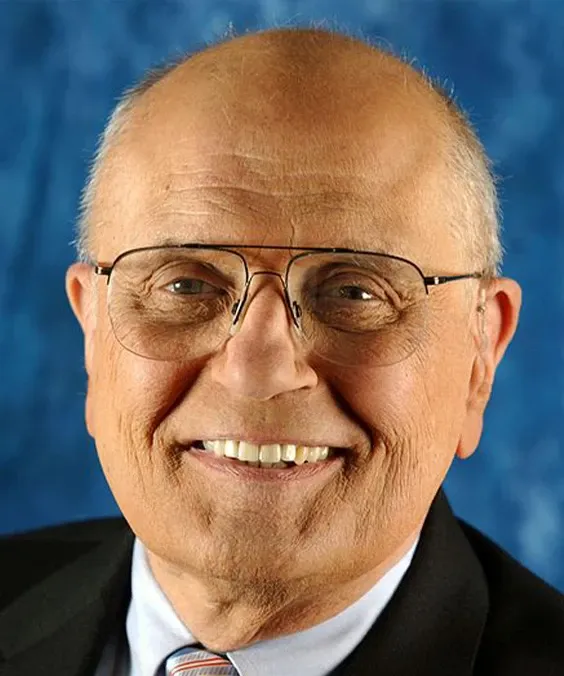
Carl Levin was a prominent American politician who served as a United States Senator from Michigan from 1979 until 2015. A member of the Democratic Party, Levin was known for his leadership on the Senate Armed Services Committee, where he played a key role in shaping U.S. military policy and defense spending. Throughout his tenure, he was an advocate for various issues, including environmental protection and consumer rights.
U.S. law binds you to report to OFAC. What are you going to do, live up to Cayman law or U.S. law?
And when will this be put in place? You said it is being put in place. When will this be accomplished?
Today's hearing will examine the money-laundering, drug-trafficking, and terrorist-financing risks created in the United States...
It helps you achieve whatever illicit objective it is that you are trying to achieve, whether it is weapons proliferation, terrorist financing, or any of the other activities that are the subject of our sanctions.
The SDN list is the compilation of individuals and entities that have been subject to sanctions under the range of sanctions programs that OFAC and the Treasury Department implement.
Given past commitments that have not been kept that the bank has a heavy burden of proof that they mean what they say
The Subcommittee investigation found that in some instances, the conclusion memos of exams at HBUS were a lot stronger than the supervisory letters that were sent to the bank.
My own belief is that part of the reason has been a culture, but the other part is that there has been just a lack of accountability.
Well, these words are the benefit of hindsight. Given what you knew then, should you not have taken enforcement action?
Eighty billion dollars is not a drop in the bucket, and we need to make sure it is spent in the right ways.
We need to change the IT budget process. Working capital funds, multiyear money--there are lots of creative ways to give CIOs more flexibility and accountability for how those IT resources are spent.
I want to give her, and I know Senator Stabenow's strong recommendation to this committee.
I think we all know how important family is to those who seek to be in public service.
Information provided by CIA detainees Khalid Sheikh Mohammed and Abu Faraj al-Libbi about bin Laden's courier being the lead information that eventually led to the location of bin Laden's compound and the operation that led to his death.
So it was over 10 times the limit, and in that Exhibit No. 39, which we discussed earlier, which was the list of the breaches, it indicates that on April 19 the limit was $5 million, but the projected SCP losses, if the credit spreads…
U.S., coalition, and Afghan forces are working shohna ba shohna, or 'shoulder-to-shoulder,' reversing the Taliban's momentum.
The United States' objectives in Afghanistan remains to deny safe havens to al Qaeda, and to deny the Taliban the ability to overthrow the Afghan Government.
We have begun the transition to Afghan security responsibility, which is to be completed by December 2014.
By the end of 2014, the transition of security leadership will be complete, and Afghans will be fully responsible for the security of Afghanistan.
This administration is firmly committed to meeting these core objectives in Afghanistan.
We should not consider a new round of BRAC until we have addressed the excess capacity overseas.
Politicians like Carl Levin