Feb 13, 2003
So therefore, the 2004 system can't be tested as a complete system with a realistic long-range target.
The Public Record
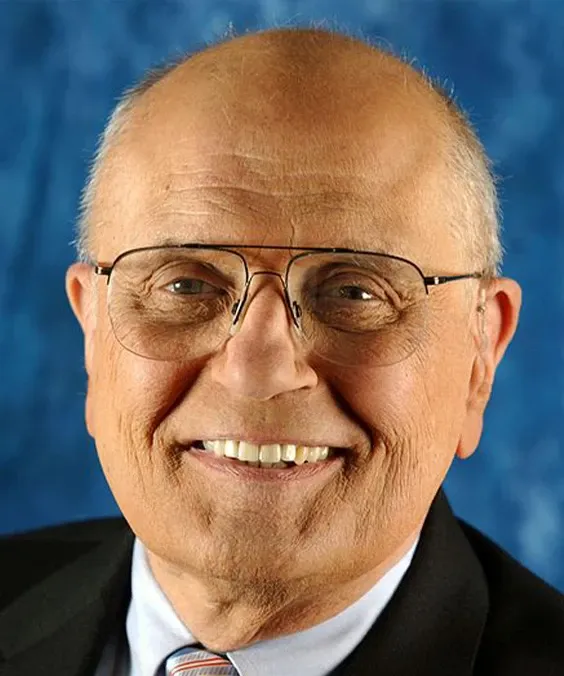
Carl Levin was a prominent American politician who served as a United States Senator from Michigan from 1979 until 2015. A member of the Democratic Party, Levin was known for his leadership on the Senate Armed Services Committee, where he played a key role in shaping U.S. military policy and defense spending. Throughout his tenure, he was an advocate for various issues, including environmental protection and consumer rights.
So therefore, the 2004 system can't be tested as a complete system with a realistic long-range target.
So there is not a long-range target suitable to be used for that test; is that correct?
The absence of a long-range target that will be able to exercise the Cobra Dane radar will preclude a system-level flight test of the 2004 national missile defense system.
I think the steps taken by our President, and supported by the witnesses before us, are very prudent and the correct steps.
This committee has historically been committed to ensure that the men and women of our military service receive the best equipment, the best training, and the best support that we can provide.
Those of us who have questioned the administration's approach, including this Senator, will now be rallying behind the men and women of our Armed Forces.
Are we getting cooperation, Admiral, from Indonesia in terms of the war on terrorism?
So are you saying that if we make a proposal along this line it would be for patrols in a non-hostile environment?
Admiral Fargo, in your written testimony you indicated that al Qaeda has given financial aid to a number of terrorist groups in the southern Philippines.
It is difficult, it seems to me, to argue that that is still a classified issue when the Assistant Secretary of State has made a statement on the record publicly about that issue.
I do not know that anybody has officially told us that. Is that in fact correct?
We want to consult with them and to work with them in terms of how to respond to what is obviously a crisis.
What the regional nations are telling us, every one, after we consult with them multilaterally, is that we ought to have direct talks with North Korea.
The North Koreans admitted that they have a secret uranium-based nuclear program, in contravention of four existing agreements.
They are focused on their duty and their mission, and that they are aware of the fact that should they be called upon to go to war, that they will have the 100 percent support of the American people.
Regardless of what the positions are that Americans take and under what conditions we should initiate an attack, there is going to be total unity in this country.
We know that the debate about whether to go to war and if so, whether we should go with or without authorization of the United Nations, is part of a debate in a democratic society.
I want to just ask General Shinseki about his reference to the missile defense system.
Prior to the decision to deploy, did Secretary Rumsfeld ask you for advice regarding the military utility of the national missile defense system as it would exist in 2004?
Here is my question: have you provided an assessment of the military utility of the national missile defense system to be deployed in 2004?
I have been one that is more than willing to look at that as an option, but I just do not want to mislead my good friend from Kansas by my silence.
I think these proposals, taken together or separately, would undermine the ability of the uniformed military to provide independent military advice to the civilian leadership, to the executive branch, and to Congress.
Politicians like Carl Levin