Jan 17, 2018
Senators Burr and King have the Repay Act, to simplify Federal repayment plans into two programs.
The Public Record
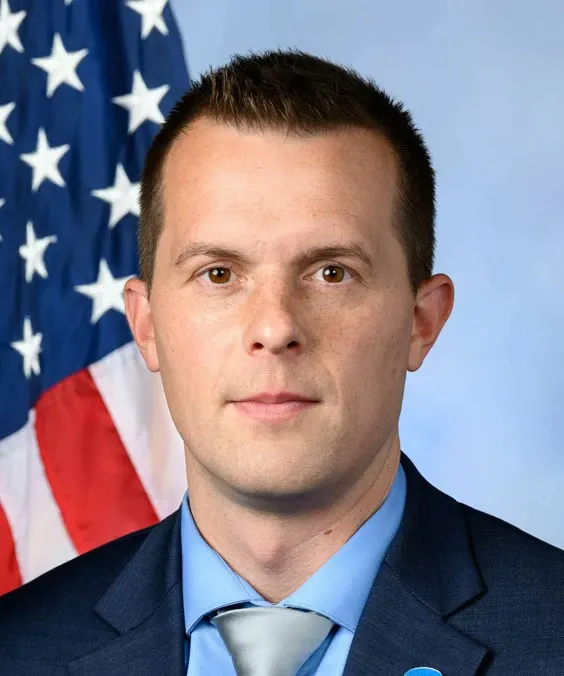
Angus Stanley King is an American politician serving as the junior United States Senator from Maine since January 3, 2013. A member of the Independent party, King previously held the position of Governor of Maine from January 4, 1995, to January 8, 2003. Throughout his political career, he has focused on issues such as education, healthcare, and renewable energy, often advocating for bipartisan solutions to complex problems. King is known for his moderate stance and willingness to work across party lines.
Senators Burr and King have the Repay Act, to simplify Federal repayment plans into two programs.
Your client is the Constitution, it seems to me. Your client is the people of the United States.
I consider your two positions two of the most important in the United States Government, for the following reason.
I think we need to recognize that when we do things like that we cut the ability of government to respond to processes like what you are talking about.
But if there was a contemplated major change in the facility, if it was transferred from public ownership, NEPA didn't apply to the transfer but then the new owner would be exempt from NEPA, would they not because it would not be a federal…
So I commend that to you for your thinking as another alternative as we are approaching this.
Well, I was wondering, there is a concern of Congress losing, entirely, the control over transfers of important public assets.
You are suggesting that Congress would slow down something? I am shocked, shocked.
If we have gone from 60 to 51, and if we are shortening the time, and if we are drifting away from the blue slip requirement, it seems to me we are moving very rapidly toward a majority only.
I agree with your statement that we haven't gotten there, but nobody has come up with an alternative for solving this problem that would maintain Israel as a democratic Jewish state.
I don't see how you can ignore one of the most significant decisions in terms of the Middle East.
You can't on the one hand talk about a more efficient permitting process and on the other hand talk about firing people and shrinking the size of government.
It's often easy, politically, to talk about shrinking the government, and hiring freezes, and fewer people.
My concern is that in this situation we see the pendulum swinging back and forth to excessive and untimely regulation that impedes responsible development, but we don't want to swing back to the point where we open the floodgates to…
I find this hearing fascinating because this is an issue I've been wrestling with for 30 years. I've been an environmental advocate, a developer, a governor, and an administrator.
Perhaps the handgun example can remind me of my father's advice that even the worst person can serve as a bad example.
We want to be partners. To the extent you can tell us what could be changed in terms of regulation, in terms of congressional requirements, please do so.
I use the word 'preposterous' that later today or tomorrow, we are going to pass a bill that is going to take between a minimum of $1.5 trillion and probably more like $2.2 trillion out of the budget.
What will probably keep happening is that we will see an increased neutering of the State Department and of diplomacy more broadly.
Defending the national security of the United States involves a continuum, it seems to me, that goes from diplomacy to war.
Politicians like Angus King