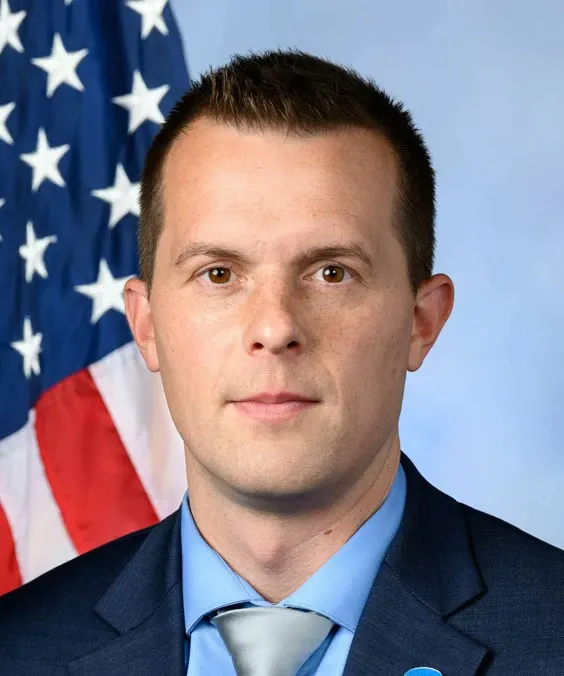
Angus King
The Public Record
Angus Stanley King is an American politician serving as the junior United States Senator from Maine since January 3, 2013. A member of the Independent party, King previously held the position of Governor of Maine from January 4, 1995, to January 8, 2003. Throughout his political career, he has focused on issues such as education, healthcare, and renewable energy, often advocating for bipartisan solutions to complex problems. King is known for his moderate stance and willingness to work across party lines.
Jun 3, 2013
What would you think of the idea of making retaliation itself a punishable offense?
Jun 3, 2013
Until you create some objectivity in the process where there is no bias and influence and prejudice against the victim, the lower-ranking individual in the situation, you are not going to solve this problem.
Jun 3, 2013
My question is the key word you used was 'can.' Should that be 'shall'? In other words, should it be an automatic proposition if the JAG officer disagrees that it goes up, not a further discretionary decision?
Jun 3, 2013
I would suggest that this might be an area to, again, get the word out that if the word gets back that somebody is being retaliated against in some way--shunned, ostracized, whatever--that that in itself ought to be, in some way…
Jun 3, 2013
Should retaliation be an offense? If someone retaliates against someone for reporting, should that, in itself, be some kind of punishable offense?
Jun 3, 2013
It just seems to me that one of the most important things is for you all to mean it. To mean it.
Jun 3, 2013
I would suggest maybe you want to look at something more specific than tampering with the system.
Jun 3, 2013
What about a situation where a decision not to prosecute would have to have the written concurrence of the JAG officer associated with that decision?
Jun 3, 2013
Senator Gillibrand has suggested that we ought to take this out of the chain of command because that is a problem in the prosecution.
May 15, 2013
I have made a proposal with some co-authors about setting up an administrative process inside the executive branch that would notify Congress about what groups are actually our enemies.
May 15, 2013
It sure would give me a lot more comfort to feel like where he is sent, whether I agree with the policy or not, that he is being sent wherever in harm's way only if both Congress and the executive branch agree and have seriously thought…
May 15, 2013
How do we breathe life into the principle of Congress having the power to declare war and the President having the power to prosecute it in this kind of new set of circumstances?
May 15, 2013
I feel very strongly that every 12 years or so, it is time to engage and figure out whether you agree with the scope of the----
May 15, 2013
Congress is given not only the power to declare war but a wide range of associated powers.
May 15, 2013
I would be joining Senator Inhofe as to who would be first in line to object to an abuse of this authority.
May 15, 2013
I just do not like the idea of reading a 12-year-old document so broadly that it renders the congressional authority and the importance of congressional authority for using military force abroad of no force and effect.
May 15, 2013
The President has authority to put boots-on-the-ground in Yemen or the Congo under this Act.
May 15, 2013
I am just concerned that reading essentially vitiates the congressional power to declare war.
May 15, 2013
Senator McCain was absolutely right. It refers to the people who planned, authorized, committed, or aided the terrorist attacks on September 11.
Politicians like Angus King