Jan 13, 2020
If we don't want the States to keep going in their own direction we should put it in writing.
The Public Record
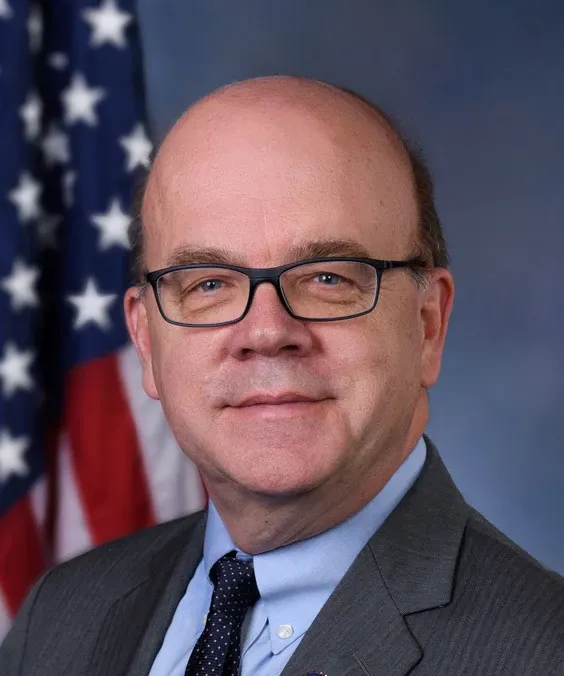
Joseph P. Kennedy III is a Democratic politician from Massachusetts who served as a U.S. Representative for the 4th congressional district from 2013 to 2021. He is a member of the prominent Kennedy political family, being the grandson of Robert F. Kennedy and the great-nephew of President John F. Kennedy. During his time in Congress, Kennedy focused on issues such as healthcare, education, and economic opportunity, advocating for policies that aimed to support working families and address income inequality. He is known for his efforts to promote renewable energy and combat climate change.
If we don't want the States to keep going in their own direction we should put it in writing.
Are you aware that 55 percent of the counties in our country do not have a single practicing psychiatrist, psychologist, or social worker?
the core question here is that, for a system that every single one of us will draw on, ... why would we not want to make sure that it is a system that is there for everyone else
So I point these stories and these statistics out because I think the reality that I think many of us experience in our healthcare system today is that, when we talk about quality, when we talk about access, when we talk about what…
The challenge--where I would challenge you and challenge others on this is that the focus of that system ends up being on those who have access to it and not the drastic number of Americans that don't.
A National Housing Act that institutionalized redlining and housing discrimination so effectively that it has resulted in a staggering racial wealth gap that still persists today.
A welfare reform bill that implemented work requirements on striving Americans and denied them access to critical anti-poverty programs that would have otherwise lifted them out of poverty.
If we are going to confront a multigenerational crisis like climate change, we must pay close attention to our prior failures.
A New Deal that excluded agricultural workers and domestic workers from its benefits and protections.
A GI Bill that denied 1.2 million black veterans the same benefits that lifted up millions of white veterans who fought shoulder-to-shoulder on the same battlefields.
A war on drugs where the enemy was far too often young black men rather than the drugs devastating our communities.
A War on Drugs where the enemy was far too often young black men rather than the drugs devastating our communities.
Congress has that authority. I would say, though, that one of the benefits of Congress actually authorizing a private auction would be that they can then use that money that would be raised to meet their objectives that Congress seeks.
It is one of the significant reasons why I came to Congress, was to protect this because I know it gave hope to so many people, particularly people with preexisting conditions.
Are you aware that for that same cost 2,000 kids could have--excuse me, 200 kids--in CHIP, eligible for CHIP in Kentucky, could have kept their healthcare?
Eighteen thousand people lost their healthcare. How many more people have to lose their healthcare before you can make a determination?
In Arkansas, more than 18,000 Medicaid recipients lost coverage after CMS approved a work requirement in that State.
What is a better use of those healthcare dollars, of U.S. taxpayer dollars: to employ an additional communications person underneath CMS that already has dozens, if not hundreds, or 200 more kids that could get access to healthcare?
Now, you might try to tell us that those people found jobs and employer-sponsored coverage, but a recent study from the New England Journal of Medicine found that Arkansas' work requirement increased uninsured rates without increasing…
Politicians like Joseph P. Kennedy III