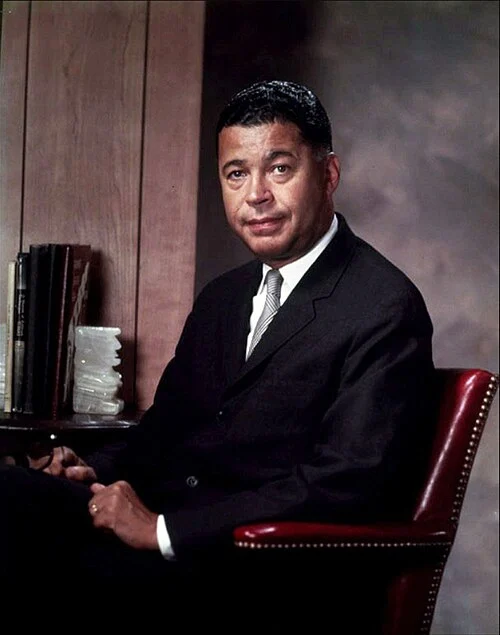
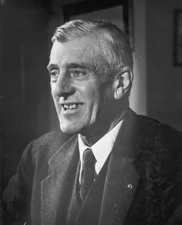
But whether a man be remembered or whether he be forgotten; whether his work be appreciated or no; whether his work be known or unknown at the time it is accomplished, is not the test of its greatness or its value to mankind.
George F. Hoar: “But whether a man be remembered or whether he be forgotten; whether his work be appreciated or no; whether his work be…”
Editor's note · Context
Hoar asserts that the true measure of a person's greatness is not their fame or recognition, but the value of their work to humanity.
Share
More from George F. Hoar
To go fully into the role of the number three in British traditions would require a profound study; but it may be useful briefly to note its influence on the Bardic poetry-- the Triads, where the subjects are all grouped in threes.
The language Statius uses is more simple than mine; but this is substantially the picture he gives: and I know of nothing that so impresses on the imagination the thunder of the power of the Roman Empire as this creation in the wilderness…
And the Greeks, in turn, owed their astronomy to the Egyptians, with whom the year was reckoned as of three hundred and sixty days; and this three hundred and sixty-day year gives us the clue to the forty-day period for holding the Forest…
We are here in the sweet silence of a summer morning, eighteen hundred years after such a scene, and able mentally to catch some glimpse of it; some echo of the storm that has left behind it so ineffaceable a mark.