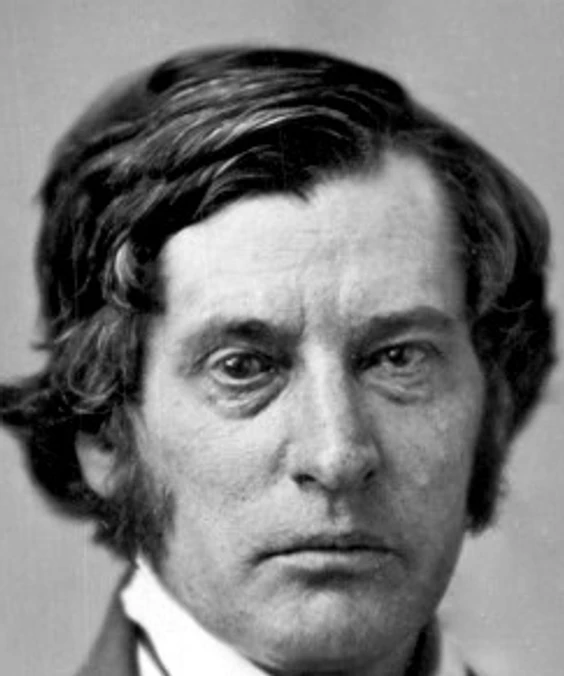
History deals with Benedict Arnold, with Aaron Burr, with the evil counsellors of Charles I. and Charles II., with Robespierre, with Barere and with Catiline, upon their merits, and draws from their lives examples, or warnings, without considering the fact that they are dead.
George F. Hoar: “History deals with Benedict Arnold, with Aaron Burr, with the evil counsellors of Charles I. and Charles II., with…”
Editor's note · Context
Hoar reflects on how history evaluates controversial figures based on their actions, regardless of their death.
Share
More from George F. Hoar
To go fully into the role of the number three in British traditions would require a profound study; but it may be useful briefly to note its influence on the Bardic poetry-- the Triads, where the subjects are all grouped in threes.
This quaint old room, with its great oak beam overhead, and its kitchen grate wide enough to roast a deer--this strange blending of an hotel dining-room and a Court of Justice, has nevertheless a link with the far distant past more…
It is not too much to say that most of the main roads in England are Roman; but the very continuity of their use has caused this to be overlooked.
The language Statius uses is more simple than mine; but this is substantially the picture he gives: and I know of nothing that so impresses on the imagination the thunder of the power of the Roman Empire as this creation in the wilderness…