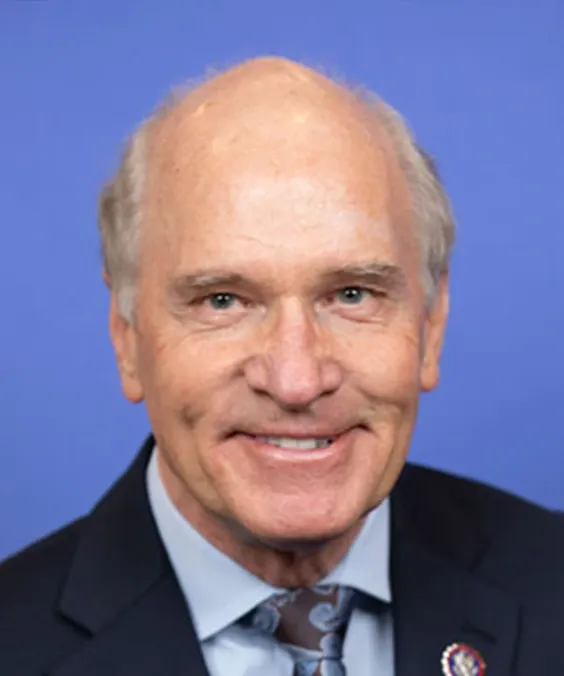
Elizabeth Warren
The Public Record
Elizabeth Ann Warren is an American attorney, academic, and politician serving as the senior United States senator from Massachusetts since 2013. A member of the Democratic Party, she has been a prominent advocate for consumer protection, economic equality, and corporate regulation. Warren gained national recognition for her work in establishing the Consumer Financial Protection Bureau and has focused on issues such as student debt relief and healthcare reform during her tenure in the Senate.
Feb 23, 2009
It is not possible to look at that without looking at what the Fed is doing as well.
Feb 23, 2009
I understand why one might design a system with a lot of flexibility, you know, that you don't just stand behind somebody putting out a fire and try to micro-manage how that happens.
Feb 23, 2009
When we did the analysis of the value of what the American taxpayer got back in return for the money that it had invested into the banks, we deliberately did not count the guarantees, which means that our $78 billion is small relative to…
Feb 23, 2009
I think this is exactly the right question and I will say, as Mr. Dodaro did, the right person to put on the stand for that question is the Treasury Department that has the authority to ask for more, indeed to demand more, not only from…
Feb 23, 2009
If this is about putting money into the hands of small businesses that have done most of the job creation outside the public sector, then you make that part of the terms of taking the money.
Feb 23, 2009
If Treasury will be in the business of trying to explain in a clear way what it is trying to accomplish...
Feb 23, 2009
The themes that we have returned to time and time again in the Congressional Oversight Panel have been about transparency, accountability, and a strategy that comes from clearly articulated goals.
Feb 23, 2009
We were very pleased to hear the President announce the Homeowner Affordability and Stability Plan last week principally because it shows the importance of dealing with the mortgage foreclosure problem as a central element in trying to…
Feb 23, 2009
I am very pleased to be here because of the important responsibility on this subcommittee and to try to help in any way that we can.
Feb 22, 2009
Treasury substantially overpaid, according to the data we've investigated, treasury put in about $254 billion for which it received about $176 billion in value from the financial institutions. That's a shortfall of about $78 billion.
Feb 22, 2009
Treasury substantially overpaid. According to the data we've investigated, treasury put in about $254 billion, for which it received about $176 billion in value from the financial institutions. That's a short fall of about $78 billion.
Feb 8, 2009
Taxpayers frankly need to be outraged, because treasury needs the message loud and clear. And the message is, you tell us the truth.
Feb 8, 2009
You tell us the truth. You describe what it is that you're doing. And then we can participate in that decision making process.
Feb 4, 2009
In a crisis, transparency, accountability, and a coherent plan with dearly delineated goals are essential to maintain the confidence of the public and the public and capital markets.
Feb 4, 2009
Treasury must do a better job of implementing four critical elements: transparency, assertiveness, accountability, and clarity.
Feb 4, 2009
Frankly, Senator, I just don't think we are at trust anymore. I want to see the mechanisms.
Feb 4, 2009
I think we start by telling the truth, and that means if we have financial institutions who have liabilities up here and the value of their assets is down here...
Feb 4, 2009
I think we are way past 'Trust me.' I am an empiricist. Show me what you have done and I will tell you whether or not I think it addresses the problem.
Feb 4, 2009
The concept of flexibility and giving a lot of flexibility to the Secretary of Treasury was a very reasonable and thoughtful approach.
Politicians like Elizabeth Warren