Sep 3, 2009
You can't really get a public option through the senate right now. You can't get conservative Democrats on board.
The Public Record
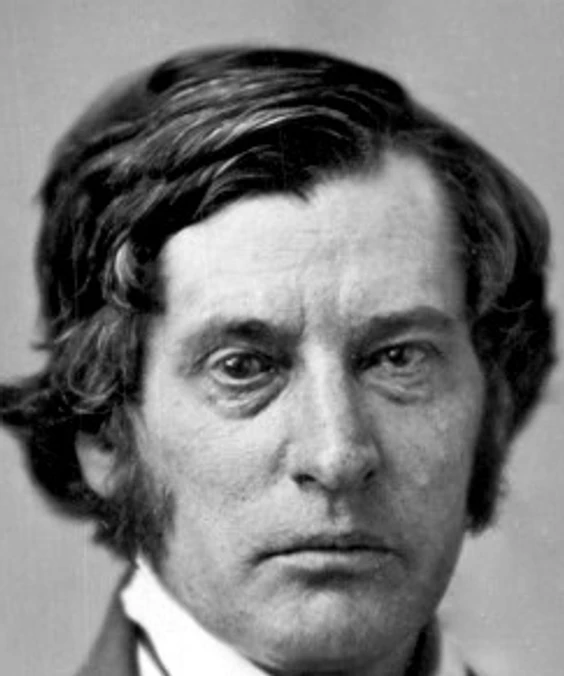
David Gergen was an American political commentator and advisor who served in the administrations of four U.S. presidents, providing insights and guidance on various political matters. Born on May 9, 1942, in Massachusetts, Gergen held significant roles in both Republican and Democratic administrations, showcasing his ability to navigate the political landscape across party lines. He was also a professor of public service at Harvard University, where he influenced a new generation of leaders. In addition to his academic work, Gergen was a senior political analyst for CNN, contributing to public discourse on current events until his passing on July 10, 2025.
You can't really get a public option through the senate right now. You can't get conservative Democrats on board.
On the other hand, a bill that does contain a robust public option looks like right now it will not get through the Senate.
He would have been better off, I think, cutting a deal three months ago and then go and taking it to the country.
I think we are going to have a lot of post mortems when this is all over, if the President gets a watered-down deal, which is I think the best he is going to get out of this right now.
I think what he needs to do before his speech, if I may say so, is see if he can't get a negotiated deal before the speech not to take sides in the speech.
Without them you can't get a bill through the House as Nancy Pelosi said last night.
The President's problem is that 60 members of the House have signed a letter saying they will not vote for a bill in effect that does not have a robust public option.
These fraudulent -- the amount of fraud in these elections could easily delegitimize the Karzai government.
You have got a lot of Democrats to President Obama's left who would like to pull out.
I think, Anderson, also, everyone has noticed how dignified and how much grace she has had during these last few days.
I do think there's a window for President Obama to rally Democrats. And -- and he can begin doing that a little bit in his -- in his eulogy on Saturday.
I think it's -- I think that Senator Kennedy's presence was missed in the last few weeks. I think he -- we would be much closer, as John McCain has said, to a bipartisan agreement had he been there to help negotiate that.
I don't see much evidence of Republicans coming around. The divisions in the country remain very deep.
Well, I think it's clear, Anderson, that had he been there this year, in full form, that it's much more likely that we would be closer to a bipartisan deal now.
Well, I think it's clear, Anderson, that, had he been there this year, in -- in -- in full form, that there's much more likely we would be closer to a bipartisan deal now.
I think the chances are growing that they will go for something more modest than what the president wants.
I think the president has to now take charge of the conversation and the negotiations and not just leave it to a lot of other people.
I think there's no way that the American people will ever accept single-payer system, a government-run health care system for all.
If they want to make it truly bipartisan, one way to reach out to Republicans is to say, let's do something about all these lawsuits that are forcing doctors to do practice defensive medicine.
The trial lawyers are the ones who fiercely want to protect the right to sue all the doctors, and they're driving up cost. But the trial lawyers are extremely allied with the Democratic Party.
It's about health insurance reform instead of health reform. It's not comprehensive in the sense of trying to change the whole system.
I think one of the other aspects of this is very fundamental to who we are as a people. There are a lot of sociologists and historians will tell you we as American people are just different. We're an outliers measured in many ways. Our…
It's about health insurance reform instead of health reform. It's not comprehensive in the sense of trying to change the whole system.
I think the president has to now take charge of the conversation and the negotiations and not just leave it to a lot of other people. Otherwise, I think the chances of failure will rise.
Politicians like David Gergen