Jul 22, 2014
Without fish, you do not have fishermen. Without fishermen, you do not have an economy in a lot of these communities.
The Public Record
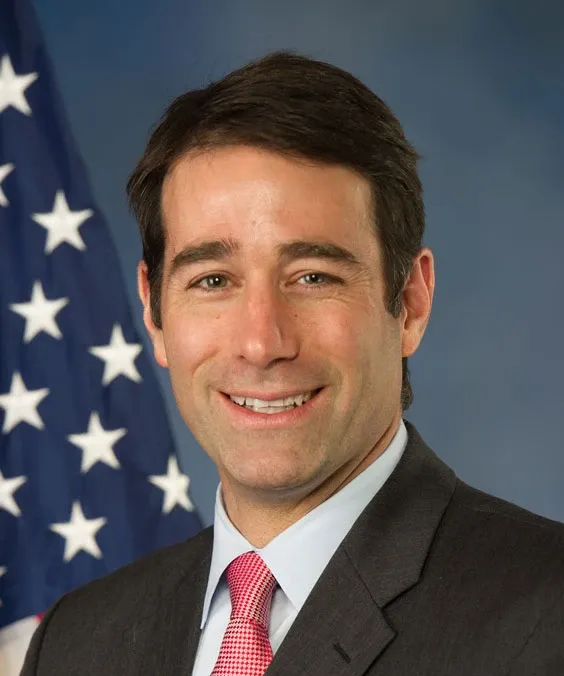
John Fleming is a Republican politician from Louisiana who served as a member of the U.S. House of Representatives from 2011 to 2017. During his time in Congress, he represented Louisiana's 4th congressional district, where he focused on issues such as healthcare, fiscal responsibility, and veterans' affairs. Fleming, a physician by profession, has been an advocate for conservative healthcare reforms and has emphasized the importance of reducing government spending. After leaving Congress, he has remained active in political circles and has been involved in various initiatives related to healthcare and public policy.
Without fish, you do not have fishermen. Without fishermen, you do not have an economy in a lot of these communities.
Again, government does not get a lot right, but this is one I think government has historically.
I do not understand is why any Member of this legislative body would oppose this bill.
This is a nonsensical Federal policy and is contrary to the intent of the 1997 protocols to the Migratory Bird Treaties.
It is our constitutional responsibility to identify and allocate how our constituent's hard earned tax dollars will be spent.
This is a nonsensical Federal policy and it is contrary to the intent of the 1997 Protocols to the Migratory Bird Treaties.
I demand a recorded vote. The Acting CHAIR. Pursuant to clause 6 of rule XVIII, further proceedings on the amendment offered by the gentleman from Louisiana will be postponed. Amendment Offered by Mr. Gosar
I have an amendment at the desk. The Acting CHAIR (Mr. Wenstrup). The Clerk will designate the amendment. The text of the amendment is as follows: At the end of the bill (before the short title), insert the following: Sec. __. None of the…
I have an amendment at the desk. The Acting CHAIR. The Clerk will designate the amendment. The text of the amendment is as follows: At the end of the bill (before the short title), insert the following: Sec. __. None of the funds made…
The simple truth is that if wildlife have no economic value, there is little if any incentive for people who live in that habitat to conserve or save them.
I also remain unconvinced that treating Grandma's ivory broach, Uncle Bob's Steinway piano, or cousin John's vintage Martin guitar with ivory pegs... as contraband will do anything to save or conserve wild elephants today.
I remain hopeful that the Fish and Wildlife Service will listen to reason and not criminalize millions of Americans who legally own ivory.
The question is should we put limits on the amount of sports trophies that come back, and we are proposing two.
By stopping legal hunting and legal importation, then what is in effect happening is that the actually opposite effect of that desired, which is to lose elephants.
Who would have more of an invested interest in conservation than hunters themselves; the same for fishermen.
The money that is necessary in Zimbabwe to protect the elephants comes from the hunters themselves.
It is inappropriate, in fact, I think unconstitutional to require someone to be guilty until proven innocent.
So as a result of one or two cases of significant, substantial amounts that you claim today... you are saying that we should now deem all owners of ivory... that it no longer has any value...
Again, sir, you are not answering my question. My question is what has changed in recent history. What is new?
Simply closing the U.S. market and prohibiting the import-export, interstate and intra-state sale of elephant ivory will not save elephants in the ivory producing states.
If we could put together something bipartisan, we can get the attention, I believe, of some of these countries that are facilitating the absolute slaughter of elephants.
I am hoping that steps beyond what we are discussing today, which needs to be further discussed and refined, can be taken by the United States which will go to trade sanctions.
We are going to have to go after the middle men, the source, the other major consumers, but we are going to have to set an example here.
If wildlife has no economic value, then there is little, if any, incentive for the people who live in that habitat to conserve or save them
Politicians like John Fleming