Jun 14, 2011
Finally, on the Boiler MACT provision, I think that rule belongs on another planet somewhere. It is completely unrealistic.
The Public Record
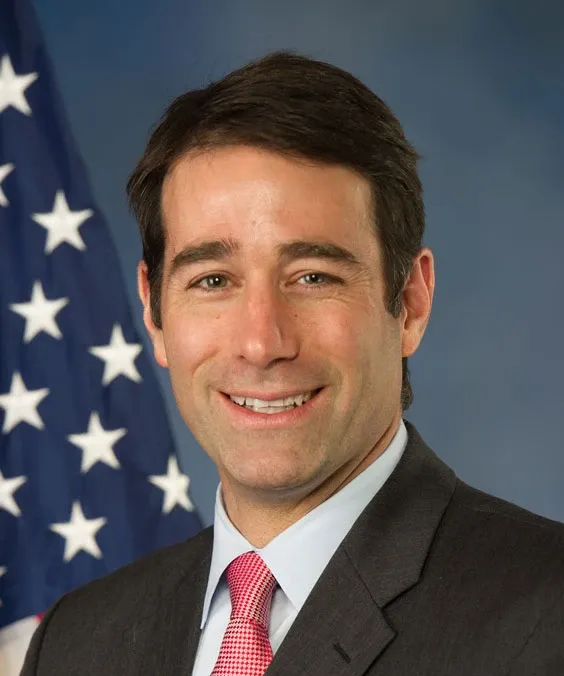
David Vitter is a former United States Senator from Louisiana, serving from 2005 to 2017. A member of the Republican Party, Vitter was known for his focus on issues such as transportation, infrastructure, and environmental policy. During his tenure, he served on various Senate committees, including the Environment and Public Works Committee, where he addressed topics like water quality and pharmaceuticals in the nation's waters.
Finally, on the Boiler MACT provision, I think that rule belongs on another planet somewhere. It is completely unrealistic.
The arguments against, I think, are very often not particularly well-founded.
It could have just the opposite effect. Because as we lose our jobs... it could have an increased effect.
Today, the Clean Air Act is being implemented in a way that bears no resemblance to what Congress intended.
The Transport Rule will help reduce that. In doing so, it will serve our economy by avoiding the significant health costs.
President Obama has a cap and trade agenda that's specifically designed to raise energy prices by forcing coal and oil out of the market.
I think sometimes there is this assumption that any expansion of limits or expansion of coverage under the program is directly counter to making the program fiscally sound.
The post-Katrina system is not working, and in my opinion, it is just the Corps trying to CYA.
I am certainly completely open to that path forward as long as there is a path forward.
The need for a full-blown longer-term reauthorization. This reauthorization or extension in tiny increments has really not served our communities and the economy well at all.
I think it is in all of our interest to demand rigorous sound science in Federal agencies.
It seems to me we could cut through a lot of this and similar debates if we had confidence in good, sound science that wasn't politicized.
I have absolutely no faith that that is done in a sound science-based way, none.
Thank you, Mr. Chairman, Ranking Member Collins and Members, for the opportunity to visit with you today and for this very important hearing.
If we could cut that in half--and that burden would still be too high, in my opinion--that would mean for a business of 20 people, over $100,000 a year.
What I am going to talk about in terms of legislation, the Small Business Paperwork Relief Act, is fundamentally different and I think is an important complement to that and is a much more immediate relief valve.
I look forward to hearing about that effort from Cass Sunstein, who is overseeing the process as the head of the Office of Information and Regulatory Affairs (OIRA).
I am very pleased to join Senator Landrieu in introducing and strongly supporting Nannette Jolivette Brown for this position.
I think, clearly, that new super-bureaucracy is going to have a huge impact, and in my view is going to be a huge threat to the continued viability of community banks.
I think the regulatory environment as it applies to community banks is critically important.
Politicians like David Vitter