Jan 28, 2020
If you were to cut mandatory spending by 30 percent, what would that do to the economy?
The Public Record
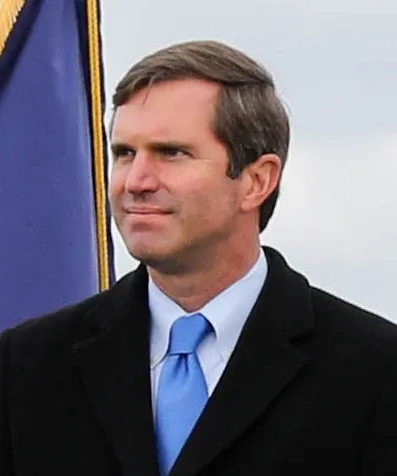
John Yarmuth is a former U.S. Representative from Kentucky, serving in the House from January 4, 2007, to January 3, 2021. A member of the Democratic Party, Yarmuth represented Kentucky's 3rd congressional district. During his time in office, he was known for his work on issues such as healthcare, education, and fiscal responsibility. He served on several committees, including the House Budget Committee, where he played a significant role in shaping budgetary policies.
If you were to cut mandatory spending by 30 percent, what would that do to the economy?
There is no question that it is the biggest driver of our deficit right now all the mandatory spending categories.
Every Republican President has come in and made the budget deficit worse. And since Carter every Democratic President has come in and made the deficit position better without exception.
President Trump drove up deficits to instead gift the wealthy and corporations with a $1.9 trillion dollar tax cut.
the tariffs put in place since 2018 are costing each American family about $1,277.
So when we talk about reforming the mandatory programs, one area we can't do anything about--we are not going to have mass euthanasia in the country.
As Chairman of the Committee, I have stressed that we need to think seriously about severe and persistent deficits in the real economy, not just deficits in the budget.
And, yes, we will need to repeal provisions of the 2017 tax law which are contributing to our current deficit without providing the growth we needed to offset it and ensure that the wealthy are paying their fair share.
This is not the President's fault. This is not the Senate's fault. We have to originate a budget out of here.
To take the President's proposal to cut Medicare and the President's proposal to cut Social Security and call that reform by placing it on the backs of the people who can least afford it...
I think we are going to need to do that because eventually we are going to raise the minimum wage.
A week from today, we will hear about the state of our Union from an impeached President who has repeatedly shown a complete disregard for the principles on which that union was founded. President Trump has brazenly trampled the…
we did pass a budget last year. We passed a two-year budget, the bipartisan budget act of 2019.
But then, Madam Speaker, the whistleblower report was made public. The report outlined how President Trump instructed his administration and OMB officials to put a hold on almost $400 million in Ukraine security assistance ahead of his…
In December 2018, GAO issued a decision, which I will include in the Record, concluding that, while the ICA does, under limited circumstances, allow the President to withhold money for up to 45 congressional session days, the President…
At this time, we did not understand that the President and OMB actually had learned from their 2018 attempts to circumvent Congress. But they learned the wrong lesson. Now, they were just trying to bypass Congress completely. By the second…
While we received a partial production of documents from OMB, they left out large batches of requested materials. Meanwhile, the House committees involved in the impeachment inquiry were getting completely stonewalled by the…
it is important to remember that cuts carry serious consequences for states and localities and the people we all serve.
Is that not a risk when you are asking for--at least if you are talking about, from our perspective, wanting to provide health care for people who need it most, is that not a risk that, with waivers, you could end up with, again, either…
Every death is one death too many. And I have had to attend too many funerals during my tenure as county executive.
When is this body, this Congress, going to do its job, its constitutional duty, to defend the United States of America, secure the borders so that Texas and border states don't have to bear the burden of a failure of this body?
This is not a partisan issue. And we have come together as Democrats and Republicans to address the opioid epidemic.
I want to find what those things are we agree on, because the three of us had an opportunity to serve on a bipartisan, bicameral budget process reform committee last cycle.
When Mr. Smith talks about his residents, yes, if you get a $100 tax cut and you are making $40,000 a year, or something less than that, that is a significant amount.
Politicians like John Yarmuth