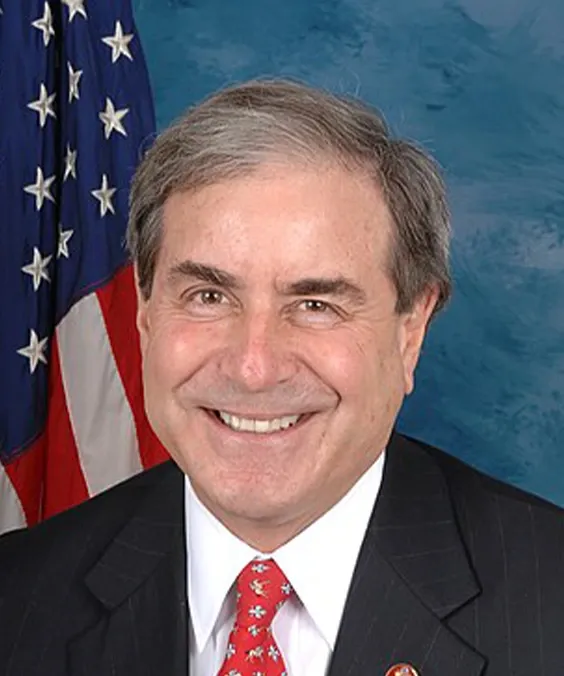
Wherever they were their house was a very home—a kind of Yankee shrine—of visiting Americans and militant Americanism.
Henry Watterson
The Public Record
Henry Watterson, the son of a U.S. congressman from Tennessee, became a prominent journalist in Louisville, Kentucky, as well as a Confederate soldier, author and partial term U.S. congressman. A Democrat like his father Harvey Magee Watterson, Henry Watterson for five decades after the American Civil War was a part-owner and editor of the Louisville Courier-Journal, which was founded by Walter Newman Haldeman and would be purchased by Robert Worth Bingham in 1919, who would end the Pulitzer Prize-winning journalist's association with the paper.
gutenberg.org
But he had been born, and had grown up, between the lids of history, and for all his learning and travel he never got very far outside them.
Beneath his seeming cold exterior and admirable self-control—the discipline of the master artist—lay the moods and tenses of the musical temperament.
Twice within the half hour death had looked him in the eye and found no blinking there.
In spite of his positiveness of opinion and amplitude of knowledge he was always courteous and deferential in debate.
Now, gentlemen,” said I, half in jest, “I am here to represent South Carolina; and if the terms given to Louisiana are not equally applied to South Carolina I become a filibuster myself to-morrow morning.
Substantially the terms had been agreed upon during the previous conferences—that is, the promise that if Hayes came in the troops should be withdrawn and the people of Louisiana be left free to set their house in order to suit themselves.
Senator,” said I, “the terms are as cheap as dirt.
Hayes, but I believe him and most of those immediately about him to have been high-minded men who thought they were doing for the best in a situation unparalleled and beset with perplexity.
They loved truth for truth’s sake, even as they loved their country.
Of him it may be truly written that he lived a life full of inspiration to his countrymen and died not in vain, “our later Franklin” fittingly inscribed upon his tomb.
A tragedy in truth it was; and yet as his body was lowered into its grave there rose above it, invisible, unnoted, a flower of matchless beauty—the flower of peace and love between the sections of the Union to which his life had been a…
The multitude remembered only the old white hat and the sweet old baby face beneath it, heart of gold, and hand wielding the wizard pen; the incarnation of probity and kindness, of steadfast devotion to his duty as he saw it, and to the…
As he lay in his coffin he was no longer the arch rebel, leading a combine of buccaneers and insurgents, which the Republican orators and newspapers had depicted him, but the brave old apostle of freedom who had done more than all others…
If ever a man needed a strong friendly hand and heart to lean upon he did during those dark days—the end in darkest night nearer than anyone could divine.
Much of what he said was founded on a basis of fact, some of it was mere suspicion and surmise, all of it came back to the main point that defeat stared us in the face.
Nobody was inclined to dispute his leadership, but everybody was prone to assert his own.
We were wholly serious—maybe a trifle visionary, but as upright and patriotic in our intentions and as loyal to our engagements as it was possible for older and maybe better men to be.
They regarded me as an impudent upstart—since I had come to Kentucky from Tennessee—as little better than a carpet-bagger; and had done their uttermost to put me down and drive me out.
But—and especially in Kentucky—there was an element that wanted to fight when it was too late; old Union Democrats and Union Whigs who clung to the hull of slavery when the kernel was gone, and proposed to win in politics what had been…
The bells that rang out in Petrograd and Moscow sounded, we are told, the death knell of autocracy in Berlin and Vienna.
The politician and the auctioneer might be described like the lunatic, the lover and the poet, as “of imagination all compact.” One sees more mares’ nests than would fill a book; the other pure gold in pinchbeck wares; and both are out for…
Lord!” cried the most delightful of liars, “How this world is given to lying.” Yea, and how exigency quickens invention and promotes deceit.
I have thought over it, sworn over it, and prayed over it,” he said, “and I am going to pardon him!
She should be a beautiful and rich young lady,” he replied, “who buys the newspaper and marries the cub—rescuing genius from poverty and persecution.
Politicians like Henry Watterson