Mar 23, 2009
The back to the basics approach articulated by the Global Food Security Act of 2009 is refreshing.
The Public Record
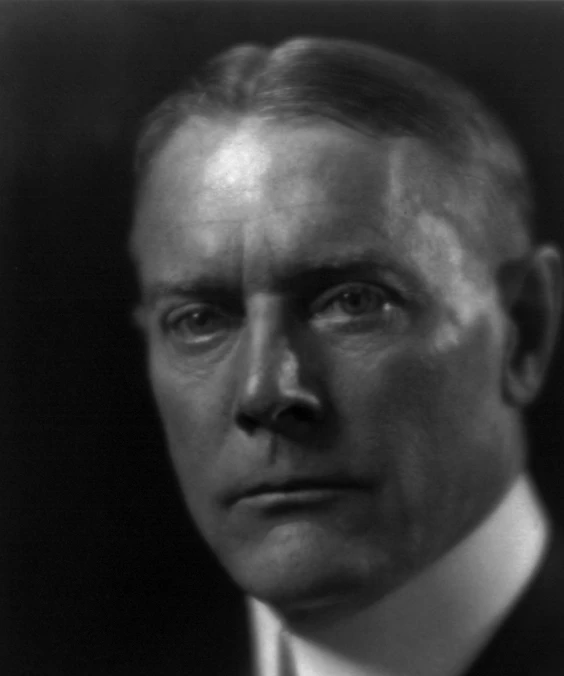
Richard Lugar was an American politician and diplomat who served as a United States Senator from Indiana from 1977 to 2013. A member of the Republican Party, Lugar was known for his significant contributions to foreign policy and arms control, particularly through the Nunn-Lugar program aimed at securing and dismantling weapons of mass destruction in former Soviet states. His tenure in the Senate was marked by a commitment to bipartisanship and a focus on international security issues.
The back to the basics approach articulated by the Global Food Security Act of 2009 is refreshing.
I believe the food security challenge is an opportunity for the United States.
I would say that, without this, we're simply whistling in the dark, in a way; we're sort of hoping for good things and good vibes to happen to people.
The Global Food Security Act of 2009 (S. 384), introduced by Senators Richard Lugar and Robert Casey, is intended to set in motion a U.S. Government strategy to address the food security needs of the developing world.
As Senator Lugar mentioned, per-capita production of maize has actually dropped by 14 percent since 1980.
I think what your bill does is to reiterate to the world that food and agricultural production, as a part of our global assistance, is a priority; it is not a secondary factor.
I've heard very little testimony with regard to feeding the people of Iraq, or people in Iraq producing food, as opposed to humanitarian shipments.
the problems of climate, drought, pest resistance all will increase in this changing world
Well, I've been especially moved by your book and the things that you've had to say, just from my own experience, that I've touched upon briefly.
the so-called Kerry-Lugar bill, providing for money for food, education, and health in Pakistan, receives far more headlines daily in Pakistan than anything we are doing with regard to our military situation.
Everybody's very remote right now from the White House, I'm afraid, in who's involved in the food business.
There is clearly an avenue, not just simply to win the hearts and minds of the Iraqis, but, as a matter of fact, to work on fundamental situations against poverty.
We also had a strong consensus that there should be significantly more ability for the U.S. Government to allow food purchasing in developing countries to support local agriculture.
It's a very positive thing for American agriculture. But, it is not inconsistent with good science, to increase yields and deal with crop protection and drought resistance while using some of these new technologies.
I've seen it, lived it, and this is why I've invited people from other countries to come to our farm.
Right now, a great deal of discussion of our coming plans in Afghanistan and Pakistan surround agriculture.
We believe that should be AID and we do not believe that it's in that place right now.
It's sort of an interesting divide in which vital national interests in Pakistan and Afghanistan with its focus on counterinsurgency and the stability of fragile governments are juxtaposed with a populations that could be a force for…
We don't think we should eliminate food aid in kind all together, because there's an important role for that, especially in emergencies.
You have demonstrated why it would be important for a coordinator on agriculture and food to be either a part of the National Security Council or a voice in the White House.
This substantial report, which I played a role in preparing, recommends twin thrusts in agricultural education and agricultural research, just like Lugar-Casey.
This is really the most graphic testimony I've heard about developments going on in Iraq.
Well, I like the thought that our universities might get together with comparable institutions, or people in education anywhere, in Africa or Asia or Middle East.
Politicians like Dick Lugar