Apr 28, 2010
As the chairman pointed out, the committee begins today to hear testimony regarding the New START Treaty and the historical context of United States-Russian arms control.
The Public Record
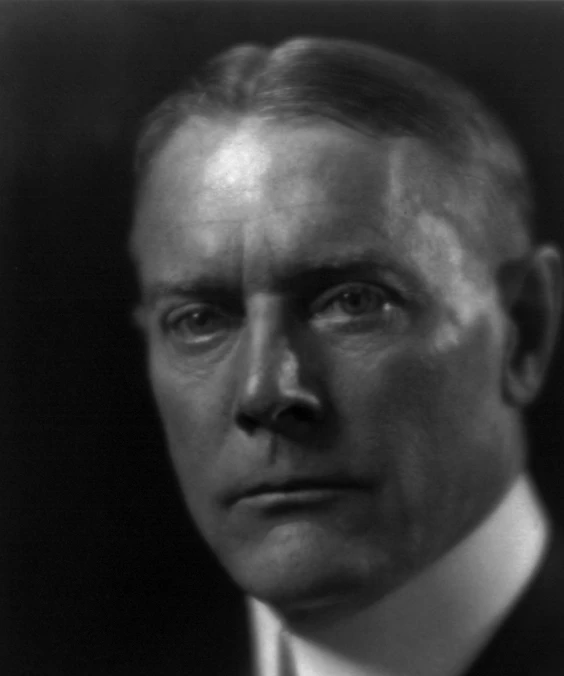
Richard Lugar was an American politician and diplomat who served as a United States Senator from Indiana from 1977 to 2013. A member of the Republican Party, Lugar was known for his significant contributions to foreign policy and arms control, particularly through the Nunn-Lugar program aimed at securing and dismantling weapons of mass destruction in former Soviet states. His tenure in the Senate was marked by a commitment to bipartisanship and a focus on international security issues.
As the chairman pointed out, the committee begins today to hear testimony regarding the New START Treaty and the historical context of United States-Russian arms control.
If conflict ensues, and you use chemical or biological weapons against U.S. forces, the American people will demand vengeance. And we have the means to exact it. this is not a threat, it is a promise.
to the extent that we have an opportunity to talk about the tactical weapons with the Russians, this is going to require another set of negotiations.
I'm hopeful they will establish a clear outline of discussions in this area.
this was the first, I think, public statement he had made about our visit with President Obama and Vice President Biden, and their assurances.
I suspect that, given what I mentioned, the potential multiple administrations, a stretch here, that perhaps our resolution of ratification ought to include language or other steps that might be useful in simply tightening our own focus on…
I would mention, just for the sake of clarity, that the START II Treaty did not come into force, due, ultimately, to Russian objections.
The treaty explicitly states that, modernization and replacement of strategic offensive arms may be carried out.
The Senate might consider language in the resolution of ratification making it clear it rejects such an attempt to pressure the United States.
My guess is that it will not be an adversarial meeting. He will probably ask when are you going to ratify the treaty.
The key to our consideration to the New START Treaty will be a discussion of various cheating scenarios.
I appreciate your comments specifically about the importance of ratifying this treaty and the basis that we have, therefore, for carefully considering, with or without Russia, nonproliferation efforts or our own buildup.
I ask, Do you mean that certain measures could be required in a resolution approving the New START Treaty that would speak to these issues?
The President made it crystal clear that he is completely committed to the full funding of this modernization program.
This is as basic for getting on with our relationships and getting to serious arms control talks with regard to the tactical missiles.
I would hope that, at a minimum, the Senate will express its sense that no further limitations on either Missile Defense or Prompt Global Strike should be considered as a part of future nuclear arms reduction agreements.
I believe Senate can play a very constructive role by ensuring that there is no room for ambiguity, through amendment or other means.
the Senate has played in all of the treaties that I have been associated with--including the INF Treaty and the START I Treaty to reduce nuclear arms and provide strategic stability.
New START establishes verification and monitoring mechanisms so that the United States can better understand how Russia is developing and deploying its strategic nuclear forces.
the Russians assured the world they were going to meet the deadline of the Chemical Weapons Convention. There's no conceivable possibility.
The United States is the only nuclear-weapons state not currently modernizing its nuclear capabilities and supporting infrastructure.
Because this point has been raised several times, some critics of the treaty have said that missile defense or defensive mechanisms occurs in the preamble and the preparatory sentence.
Let me thank you for your generous comment about the cooperative threat reduction, the so-called Nunn-Lugar program.
Politicians like Dick Lugar