On March 2, 1824, Marshall delivered that opinion which has done more to knit the American people into an indivisible Nation than any other one force in our history, excepting only war.
Albert Beveridge
The Public Record
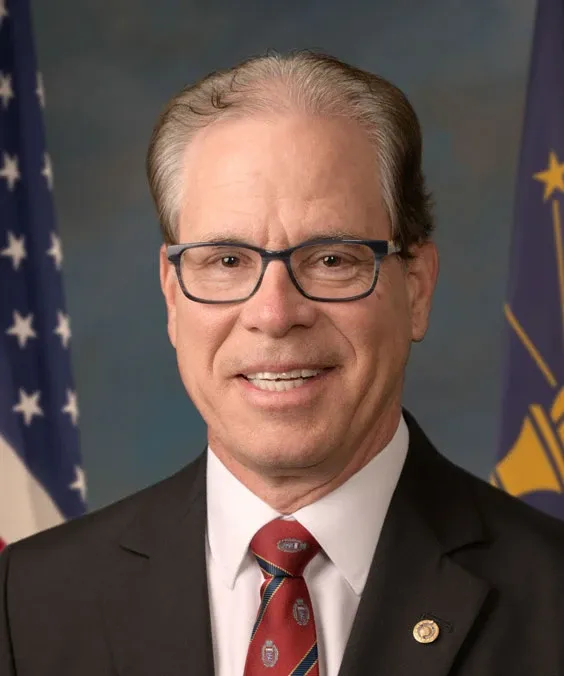
Albert Jeremiah Beveridge was an American historian and United States senator from Indiana. He was an intellectual leader of the Progressive Era and a biographer of Chief Justice John Marshall and President Abraham Lincoln.
gutenberg.org
The power over commerce, including navigation, was one of the primary objects for which the people of America adopted their government....
Everybody knows that foreign commerce is that of the whole Nation and not of its parts.
There is a vast difference between taxation for the regulation of commerce and taxation for raising revenue.
The National power over navigation is not "incidental to that of regulating commerce; ... it is as the thing itself; inseparable from it as vital motion is from vital existence....
But few events in our history have had a larger and more substantial effect on the well-being of the American people than this decision, and Marshall's opinion in the announcement of it.
It was a guarantee that they might build railroads across State lines and be safe from local interference with interstate traffic.
It is not immoderate to say that no other judicial pronouncement in history was so wedded to the inventive genius of man and so interwoven with the economic and social evolution of a nation and a people.
After almost a century, Marshall's Nationalist theory of commerce is more potent than ever; and nothing human is more certain than that it will gather new strength as far into the future as forecast can penetrate.
All correctly understood that the Nationalism expounded by Marshall, if truly carried out, sounded their doom.
So the infinitely important controversy reached a settlement that, to this day, has not been disturbed.
Ogden, Marshall established the supremacy of Congress over commerce among the States, he also announced the absolute power of the National Legislature to control trade with foreign nations.
It was not long before an opportunity was afforded him to apply this principle, and to supplement his first great opinion on the meaning of the commerce clause, by another pronouncement of equal power and dignity.
When estimating our indebtedness to John Marshall, we must have in mind the state of the country at the time his Constitutional expositions were pronounced and the inevitable and ruinous effect that feebler and more restricted assertions…
The same want of a general power over Commerce led to an exercise of this power separately, by the States, w^{ch} not only proved abortive, but engendered rival, conflicting and angry regulations.
A person as old as I am feels that his home is his place of most comfort, and his old wife the companion in the world in whose society he is most happy.
I long to leave this busy bustling scene & to return to the tranquility of my family & farm.
I have no desire to be in the convention and do not mean to be a candidate.
I was in earnest when I told you that I would not come into that body, and really believed that I should adhere to that determination; but I have acted like a girl addressed by a gentleman she does not positively dislike, but is unwilling…
If we find that a decided majority is against retaining it I should prefer making a compromise by which a substantial property qualification may be preserved in exchange for it.
The question whether white population alone, or white population compounded with taxation, shall form the basis of representation will excite perhaps more interest than even the freehold suffrage.
As the supply exceeds the demand the price of labour will cheapen until it affords a bare subsistence to the labourer.
The superadded demands of a family can scarcely be satisfied and a slight indisposition, one which suspends labour and compensation for a few days produces famine and pauperism.
The American Nation was his dream; and to the realization of it he consecrated his life.
Marshall answered: "I concur with you in thinking that nothing portends more calamity & mischief to the Southern States than their slave population.
Politicians like Albert Beveridge