The fate of Ireland would be that of America, if an uncontrolled Judiciary were allowed to carry out, without fear of impeachment, the will of a high-handed President, in order to win the preferments he had to offer.
Albert Beveridge
The Public Record
Albert Jeremiah Beveridge was an American historian and United States senator from Indiana. He was an intellectual leader of the Progressive Era and a biographer of Chief Justice John Marshall and President Abraham Lincoln.
gutenberg.org
In the dark catalogue of criminal enormities, perhaps few are to be found of deeper dye" than those named in the articles of impeachment.
The independence of the Judiciary, the political tocsin of the day, and the alarm bell of the night, has been rung through every change in our ears....
Mastering his indisposition, however, Randolph closed in a passage of genuine power: "We adjure you, on behalf of the House of Representatives and of all the people of the United States, to exorcise from our Courts the baleful spirit of…
In short, sir, Gravity himself could not keep his countenance at the nauseating littlenesses which were resorted to for proof of atrocious criminality, and indignation melted into ridicule at the puerile perseverance with which nothings…
His speech ... was devoid of argument, method or consistency--but was replete with invective & even vulgarity....
This was the first formidable assertion of the principle of equality among nations on the ocean.
Marshall gives a compact and accurate analysis--by far the best work he has done in the whole four volumes--of the party beginnings discernible when the clouds of the Revolutionary War began to break.
Neither human events nor Thomas Jefferson had waited upon the convenience of John Marshall.
They had become anti-National, and, in their ardor for Great Britain, had all but ceased to be American.
The most that he could do was to state the principles upon which opposing parties had been founded, and the determinative conflicts that had marked the evolution of them and the development of the American Nation.
He must expound the philosophy of Nationalism as opposed to that of Localism, and must enrich his exposition by the unwritten history of the period between the achievement of American Independence and the vindication of it in our conflict…
Moreover, his fairness, restraint, and moderation, even in the treatment of subjects regarding which his own feelings were most ardent, give to his pages not only the atmosphere of justice, but also something of the artist's touch.
These men resisted every attempt to transfer from their own hands into those of Congress all powers that were, in reality, National.
No act of heroism ever kindles in the mind of this writer a single aspiration in favor of the holy cause which inspired the bosom, & nerved the arm of the patriot warrior.
No gloom of events, no lowering of prospects ever excites a fear for the issue of a contest which was to change the condition of man over the civilized globe.
Washington ever intended that his papers should be used for the suicide of the cause, for which he had lived, and for which there never was a moment in which he would not have died.
It has been one of the most widely purchased and read books in our history, and has profoundly influenced the American conception of Washington.
To it we owe the grotesque and wholly imaginary stories of young Washington and the cherry tree, the planting of lettuce by his father to prove to the boy the designs of Providence, and other anecdotes that make that intensely human…
But he must be an Idiot or a Lunatic if he has really planned and attempted to execute such a Project as is imputed to him.
Moreover, that spirit of expansion--of taking and occupying the unused and misused lands upon our borders--which has been so marked through American history, was then burning fiercely in every Western breast.
Bombastic sentences--entirely unlike any language appearing in Burr's voluminous correspondence and papers--were well chosen for their effect on Wilkinson's vainglorious mind: "The gods invite us to glory and fortune; it remains to be seen…
Surely Jefferson would not visit his wrath on one whose only crime was the gathering of men to strike at Spain with which power, up to that very moment, everybody supposed war to be impending and, indeed, almost begun.
So General James Wilkinson, as head of the Army of the United States, began a reign of lawless violence that has no parallel in American history.
Our children see this and learn to imitate it....
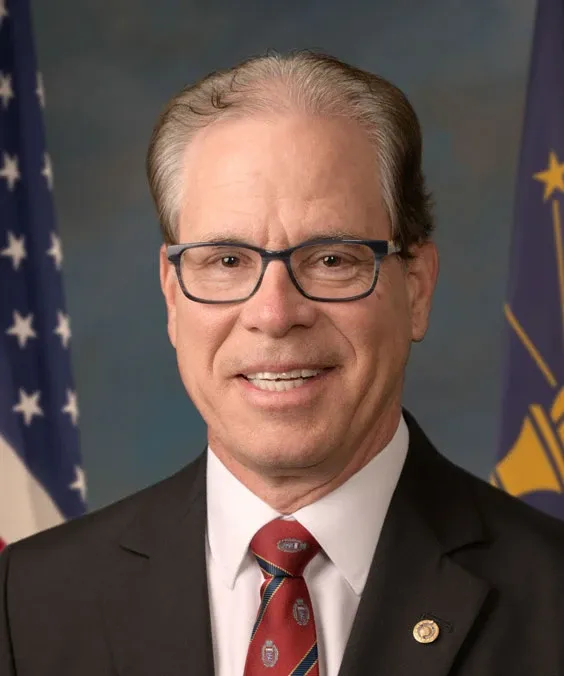
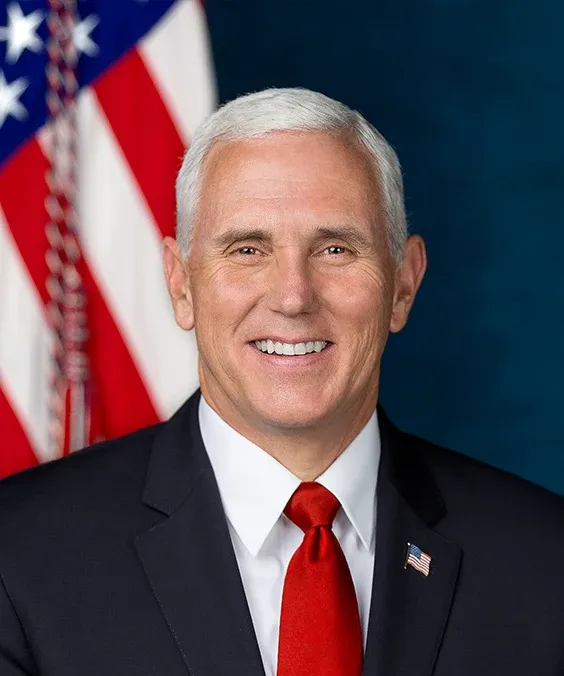
Politicians like Albert Beveridge