Jul 31, 2024
EV technology is impressive for some, but Iowans know that there are far more challenges to EV adoption than many care to admit.
The Public Record
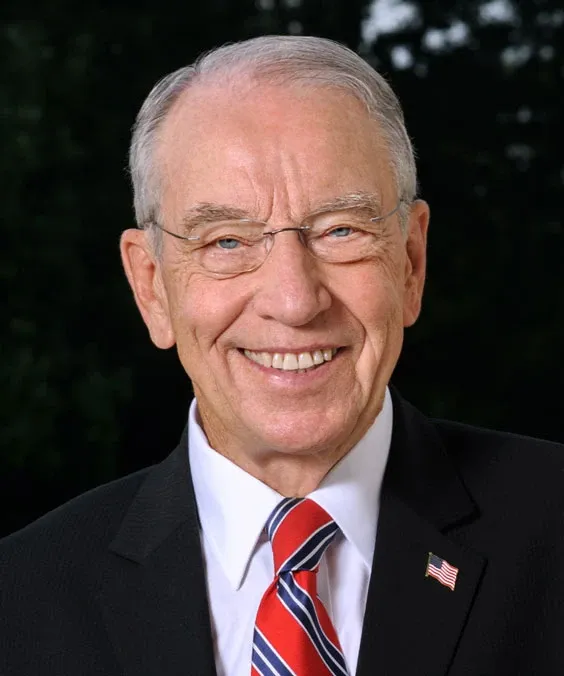
Charles E. Grassley is a prominent American politician currently serving as a United States Senator from Iowa. A member of the Republican Party, Grassley has been in office since 1981, making him one of the longest-serving senators in U.S. history. Throughout his tenure, he has focused on issues such as agriculture, healthcare, and fiscal responsibility. Grassley has played a significant role in various legislative efforts, including tax reform and oversight of government spending.
EV technology is impressive for some, but Iowans know that there are far more challenges to EV adoption than many care to admit.
Any great power that spends more on debt service than on defense, will not stay great for a long time, a very long time.
I don't put much stock in a study of Biden's fiscal records that leaves out hundreds of billions of dollars of unlawful student loan giveaways.
I've criticized both Presidents for not doing enough to control spending and deficit.
We must stop digging ourselves into an ever deeper budget hole, and I think the budget agreement reached between McCarthy and Biden a year ago starts us down that track.
President Biden continues to use his pen and phone to spend trillions, particularly on student loan bailouts, and in these unprecedented fiscal times that's the height of recklessness.
Updating the Budget Act for the 21st Century is a shared goal worth continuing to work towards.
Rather than punish success, tax reform should focus on incentivizing work, savings, and investment.
Taxpayers and workers, and investors are smarter than we are in the United States Senate, because we've had 93 marginal tax rates.
Most importantly, we must have a frank discussion about Washington's spending addiction.
I'm going back to this comes up why can't you guys do something about saving Social Security and Medicare?
It's just ridiculous to think you can raise marginal tax rates to 93 percent and you're going to get people stupid enough to pay 93 percent of their income in taxes, so they're working for nothing.
Okay. Won't the policies Democrats chose to enact as part of their misnamed Inflation Reduction Act overwhelmingly benefit large corporations, as well as banks and even private equity firms?
However, at the Budget Committee hearing last year, the majority witness, Bruce Bartlett, let slip the truth by saying this. Quote: 'I think we should raise taxes on the wealthy, but we're going to have to eventually raise taxes on the…
Okay. As you discussed in your testimony, Americans have been ravaged by high inflation, and the other side continues to propose tax increase after tax increase.
Isn't it true that many of the tax proposals that we've heard about today haven't been enacted because of the Democrats' own failure to enact when they had that opportunity?
My democrat colleagues talk a big game about making Wall Street pay their fair share.
Congress should regularly examine tax incentives, just as we should review spending programs to ensure that they're working as intended.
Activists often adopt scientific arguments as a source of a moral legitimation for their movements which can be radical and destructive rather than rational and constructive.
China has a defense budget of $230 billion, but like many statistics published by the country's communist government, the numbers are very suspect.
The most comprehensive and serious challenge to the United States national security is PRC's coercive and increasingly aggressive endeavor to refashion the Indo Pacific region and the international system to suit its interests and…
The pragmatic, bipartisan approach Congress has taken needs to be broadened to include the significant economic and budgetary implications that climate change brings.
Immediate attention to those climate threats and other global challenges goes beyond traditional national security priorities.
Recognition that climate change will continue to drive instability around the world.
I agree that climate change presents some national security related challenges.
Politicians like Charles E. Grassley