May 3, 2022
This new bill that Senator Schatz has about the Connect Health Act, Americans Indians and Alaska Natives, that would work great.
The Public Record
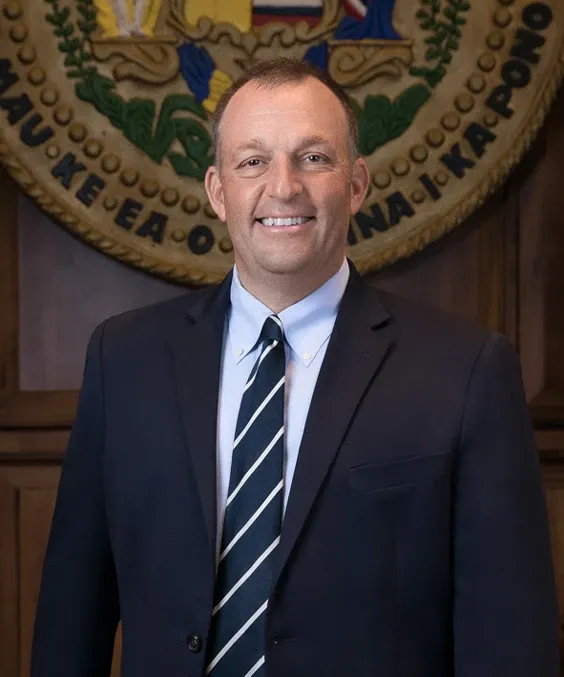
Brian Emanuel Schatz is an American politician serving as the junior United States senator from Hawaii since December 26, 2012. A member of the Democratic Party, Schatz has focused on issues such as climate change, healthcare, and education during his time in office. He succeeded Daniel Akaka and has been an advocate for renewable energy and environmental protection, reflecting Hawaii's unique ecological challenges and opportunities.
This new bill that Senator Schatz has about the Connect Health Act, Americans Indians and Alaska Natives, that would work great.
The Bipartisan Infrastructure Law is just the first step to address the poor infrastructure conditions in Native communities.
Federal funding for infrastructure in Native communities across the Country has long lagged behind the need.
Investing in our infrastructure is investing in the future of our Native peoples.
Thanks to the bipartisan leadership of many on this Committee, the Infrastructure Investment and Jobs Act contains more than $11 billion in dedicated resources for Native communities.
Do I have your commitment to continue to support the Women's Bureau so that it can build on the successes from the last century?
I think Job Corps is one of the most underutilized programs that we have in the Federal Government.
The pandemic has magnified this problem, with the CDC recently reporting that guns have surpassed auto accidents as the leading cause of death for children and teenagers in America.
I want it to be part of the curriculum. I want it to be part of where the rubber hits the road, which is, as you know, in the Foreign Service.
Freedom House says that global internet freedom has declined for the 11th consecutive year.
So today is Global World Press Freedom Day. What do you think about adding press freedom training to Foreign Service Officers?
The United States is a leader in both ground- and space-based astronomy due to six decades of sustained commitment to develop, fund, and operate cutting edge instruments.
The environmental movement of the last generation was partly organized around stopping things. But to save the planet we are going to have to build things at unprecedented speed and scale.
If we are really serious about climate action, we have to be really serious about climate action
I think our instincts are going to be proven to be right, and then I do think we--there is probably a convening with the mobile carriers, and with the app stores, and all the rest of it, and the autos to try to figure out what we can do to…
We don't do anybody any favors, on either side of the aisle, by talking about something that may not be achievable
At-home over-the-counter antigen tests are an important public health tool to mitigate the spread of COVID-19.
This is a Hawaii-specific question. We don't have a halfway house in Hawaii, since October of 2019.
And coming from a person who exonerated Donald Trump for extorting Zelenskyy for withholding lethal aid. They withheld legal aid until -- unless Zelenskyy would release false smears against Joe Biden`s son.
He is blocking the staffing of the senior leadership at the Department of Defense. And this comes from a guy who raised his fist in solidarity with the insurrectionists. And this comes from a guy who before the Russian invasion suggested…
He’s saying it’s going too slow. He voted no. We voted no on Ukraine aid. And now he has the gall to say it’s going too slow.
This comes from a guy who just about a month ago voted against Ukraine aid. He’s saying it’s going too slow. He voted no.
Politicians like Brian Schatz