May 21, 2018
I am sure that you feel strongly, as I do, that the U.S. territories should be given equal access to Federal programs and funding, on parity with the 50 states.
The Public Record
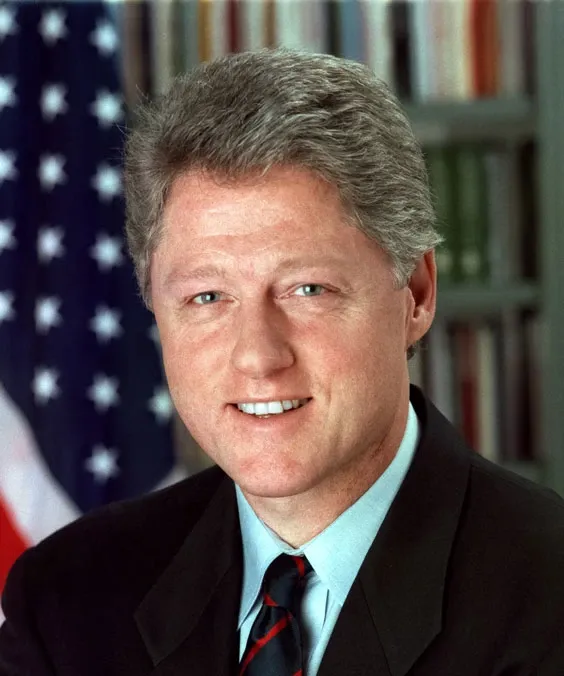
Madeleine Bordallo is a Democratic politician who served as the Delegate to the United States House of Representatives from Guam from 2003 to 2019. During her tenure, she focused on issues such as military affairs, education, and health care, advocating for the interests of Guam and its residents. Bordallo was the first woman to represent Guam in Congress, and she played a significant role in promoting the island's economic development and environmental protection initiatives. She was known for her commitment to improving the quality of life for the people of Guam and worked to secure federal funding for various local projects.
I am sure that you feel strongly, as I do, that the U.S. territories should be given equal access to Federal programs and funding, on parity with the 50 states.
This is not a fault of anybody who put these laws together way back in 1937.
I appreciate and welcome the opportunity to support such an effort and congratulate Congresswoman Bordallo, Resident Commissioner Gonzalez-Colon, Congresswoman Holmes Norton, Congressman Sablan, and Congresswomen Radewagen and Plaskett for…
H.R. 5875 is supported by all six Members representing U.S. territories and the District of Columbia.
This proposal amends the Pittman-Robertson Wildlife Restoration Act and the Dingell-Johnson Federal Aid in Sport Fish Restoration Act to allow United States territories and the District of Columbia to enjoy equal funding considerations for…
H.R. 5875, introduced by Delegate Bordallo of Guam, seeks to address parity concerns between the 50 states and U.S. territories.
I am working very closely with Mr. Young, and he is very knowledgeable person, the Dean of Congress right now.
And, unfortunately, every month people are getting assassinated that we are working with around the world to protect natural resources.
Restoring our military's readiness has been identified as a priority for the Department of Defense as well as for this subcommittee.
In my opinion, it would be a great savings, because right now we are bringing them in from the States.
I recently spoke with the Chief of Staff of the Army, and he thought it made sense to have the Guam Guard support the mission.
I am alarmed by the large discrepancy in shark fin import-export data collected by NOAA versus the United Nations Food and Agriculture Organization.
My second part of this question is how can the U.S. leadership prompt other countries to crack down on harmful shark finning?
The science is very clear. We are facing a startling decline in shark species and populations worldwide.
I am very pleased that the Subcommittee is hearing testimony on H.R. 1456, which is the Shark Fin Sales Elimination Act, sponsored by Congressman Royce who testified earlier.
H.R. 1456 closes the last legal loophole making it illegal under Federal law to sell, import, or possess shark fins on U.S. soil across all jurisdictions.
The Shark Conservation Act definitively banned the brutal practice of shark finning in all U.S. waters and the possession abroad of illegally taken shark fins at sea.
I remain a strong advocate for the Navy to include the modernization and the growth of its fleet.
I am concerned that the 2019 budget request may not appropriately balance long-term readiness recovery through modernization with near-term efforts through sustainment and maintenance.
So, will you commit to providing me and the committee with an update on the status of the Navy's efforts to return these eight parcels?
I am concerned about whether this budget appropriately balances near-term readiness recovery through investments in the operation and maintenance accounts with long-term readiness through procurement and modernization.
Last year was a very challenging year for the Navy. And I am hopeful that 2018 will be much better in terms of improving your readiness posture.
Constant concern I hear from Guam residents is that we are part of the United States, and yet we cannot vote for President.
Politicians like Madeleine Bordallo