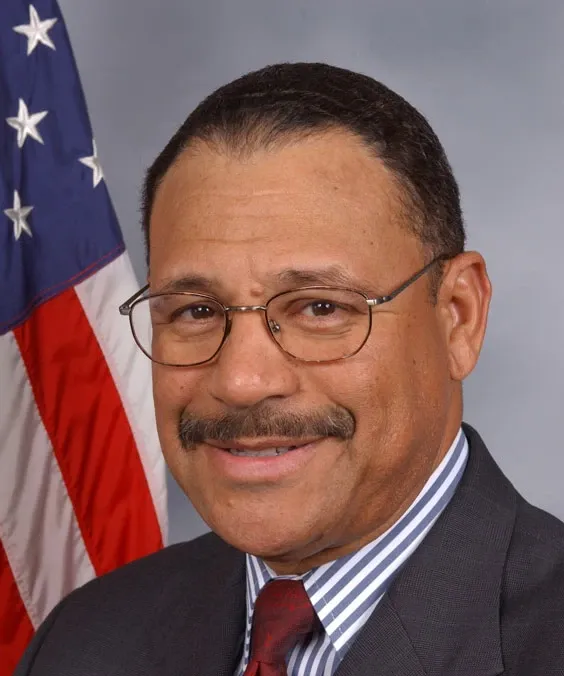
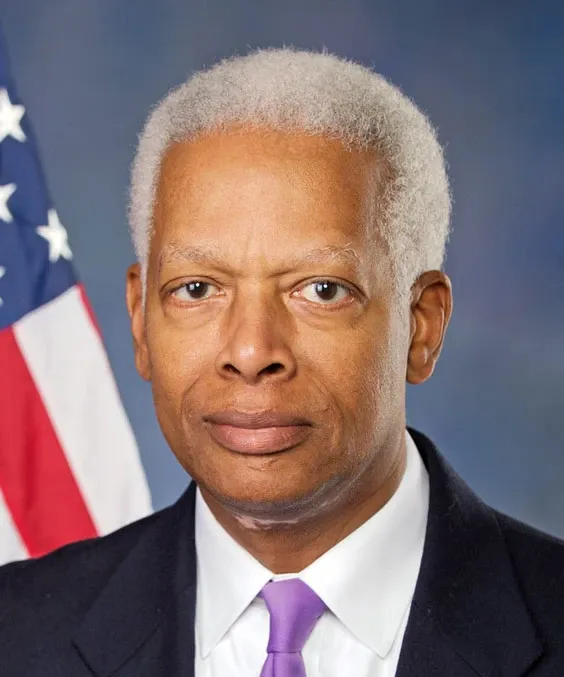
David Scott
The Public Record
David Albert Scott is an American politician serving as a member of the United States House of Representatives from Georgia's 13th congressional district since 2003. He is a member of the Democratic Party. Throughout his tenure, Scott has focused on issues such as economic development, healthcare, and education, advocating for policies that benefit his constituents in Georgia. He has also been involved in various committees, contributing to discussions on national and local issues.
May 20, 2013
That June deadline is very important for that as well for the joint rulemaking.
Apr 23, 2013
The fundamental issue here that we must first address is whether or not the current health of the private mortgage market is strong enough to bear the risk of bringing back private investment capital.
Apr 9, 2013
We have to stop this talk about taxing credit unions and move on to try to serve the underserved and build wealth together.
Apr 9, 2013
The credit unions play an extraordinary role in our entire economy and, certainly, a central role in our financial system.
Mar 19, 2013
Many of us feel that some of those bank closures were not necessarily caused by the external strong winds of the economy, but in many respects by not the proper type of regulation, perhaps overaggressive regulations.
Mar 19, 2013
I certainly hope that you will soon become aware of it because you all are the source of this bill.
Mar 19, 2013
We introduced Public Law 112-88 to address the concerns that our constituents in Georgia have that they are facing not only more regulations, but more aggressive enforcement.
Mar 18, 2013
Companion legislation (H.R. 1155) has been introduced in the House of Representatives by Insurance Subcommittee Chairman Randy Neugebauer and Rep. David Scott.
Mar 13, 2013
I am supportive of these bills that we are discussing today, because I think it is very important for us to emphasize that none of these bills, neither in spirit nor in letter, seek to undermine the regulatory regime prescribed by Title…
Mar 13, 2013
I must say at the outset that it is somewhat unfortunate that we are trying to pack so much into one relatively brief hearing.
Mar 13, 2013
My colleague here, Mr. Bentsen, said there were many studies that didn't find any connection, and that is like saying that there are many studies that didn't find Pluto until they found Pluto.
Mar 13, 2013
The best way to assure that these global markets continue to stay global and you don't have local solutions to deal with this issue, is to do away with any impediments or fragmentation, and we see indemnification as an impediment to the…
Mar 13, 2013
These bills will not lead to new loopholes, these bills will not lead to lax regulation, and they will not lead to another Wall Street meltdown.
Mar 13, 2013
I think it is very important for us to emphasize that none of these bills, neither in spirit nor in letter, seek to undermine the regulatory regime prescribed by Title VII of Dodd-Frank.
Mar 5, 2013
What are the consequences of moving ahead without giving any thought to what will take the place of this gigantic void?
Mar 5, 2013
I just think it is the height of irresponsibility for us to do this without some good discussion.
Mar 5, 2013
I stated my concern and great worry about this whole issue in my opening statement.
Mar 5, 2013
We have to make sure that there is a willingness on the part of the private market to fill the gap that will be left by the absence of Fannie and Freddie.
Mar 4, 2013
I want to hopefully work with you on an issue that a lot of folks are talking to me about back home, and that is school nutrition.
Mar 4, 2013
And your process of dealing with the furloughing of these food inspectors that you have outlined so far is basically categorized by the $85 billion sequester that will go through September 30th.
Politicians like David Scott