Oct 22, 2019
One of my bills is in it, the Firewall Act, which would make sure that foreign money would not be allowed to buy online political ads in our country.
The Public Record
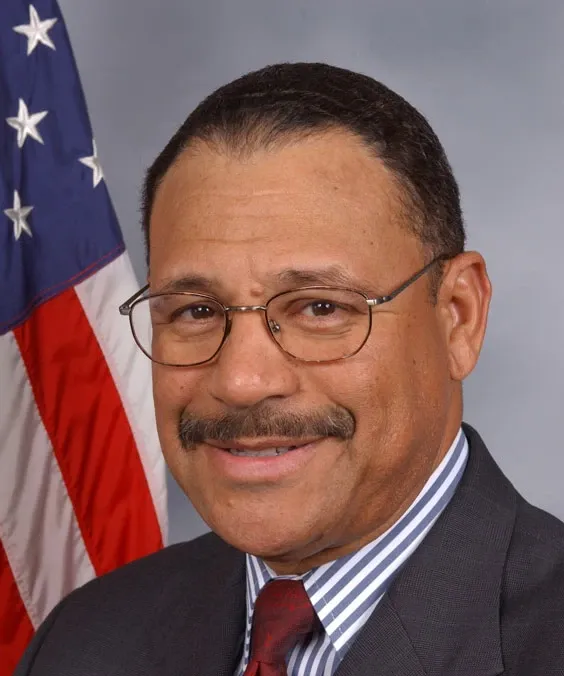
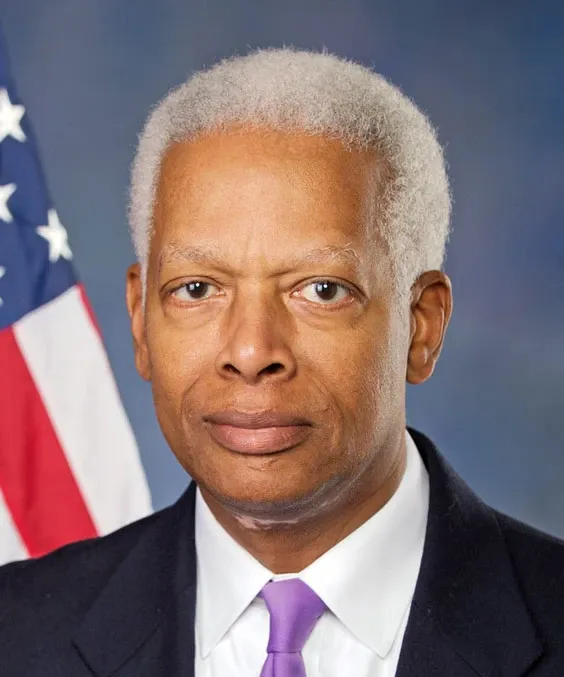
David Albert Scott is an American politician serving as a member of the United States House of Representatives from Georgia's 13th congressional district since 2003. He is a member of the Democratic Party. Throughout his tenure, Scott has focused on issues such as economic development, healthcare, and education, advocating for policies that benefit his constituents in Georgia. He has also been involved in various committees, contributing to discussions on national and local issues.
One of my bills is in it, the Firewall Act, which would make sure that foreign money would not be allowed to buy online political ads in our country.
But Mr. Zuckerman, I have here HUD's report, and it clearly says that your platform allows advertisers to restrict certain users from viewing ads on your platform.
We in Congress have worked hard, for the past 50 years, to eliminate the very racial discrimination practices that your platform is guilty of.
Mr. Zuckerberg, thank you for joining us today. Back during the 1960s and 1970s, Congress passed a series of laws intended to stamp out discrimination in lending and housing.
Today, you testified that you believe in giving people a voice, and Mr. Zuckerberg, is Facebook able to assure us that it will support users' fair and open discussions and communications related to the risk as well as the benefits of…
I support vaccinations of children and adults, but I also support open and frank communication of the risks of vaccination.
I believe Facebook is a great innovation that has much potential for good, that we welcomed an innovation together with the controversies that it spawned.
These issues cut across parties and districts, and I believe that our work here matters to the vulnerable communities we all represent in Congress.
I must close with thanking, again, Chairwoman Waters, for putting issues of diversity and inclusion at the heart of our committee's work.
We cannot allow minority banks to disappear. And we must work in earnest to tackle the challenges of banking discrimination in lending and foster genuine diversity in the banking sector.
I think it was Representative Loudermilk who mentioned that it is death by a thousand cuts.
Let me just commend you. This is an extraordinarily important and critical issue.
We are trying to find some ways to address that, but what it is doing is, it is pushing those new employees to either take long commutes from other communities.
In my hometown in Bartow County, Georgia, we just posted in August the lowest unemployment rate in the history of that county.
If they did it for the slaves coming out of the Civil War, 4.5 million, surely, we can do it to really solve the problem of getting to 58 million underbanked.
We need to ensure that there is a fund created for MDIs to support financial literacy and alternatives to predatory products.
The energy, the thrust, the urgency of this government to respond to this is not.
I appreciate, Dr. Calabria, the efforts to retain capital, because we do need to have that rainy day fund if and when we do get into the next financial crisis.
I appreciate what you are trying to do with the reforms of the GSEs. You are looking for that running car.
It doesn't seem like 10 years, but it is about time we kind of look back and see where we are now.
The American people are depending on us, and I sincerely hope that you three gentlemen will open our eyes to much of what we are now only dimly aware.
Politicians like David Scott