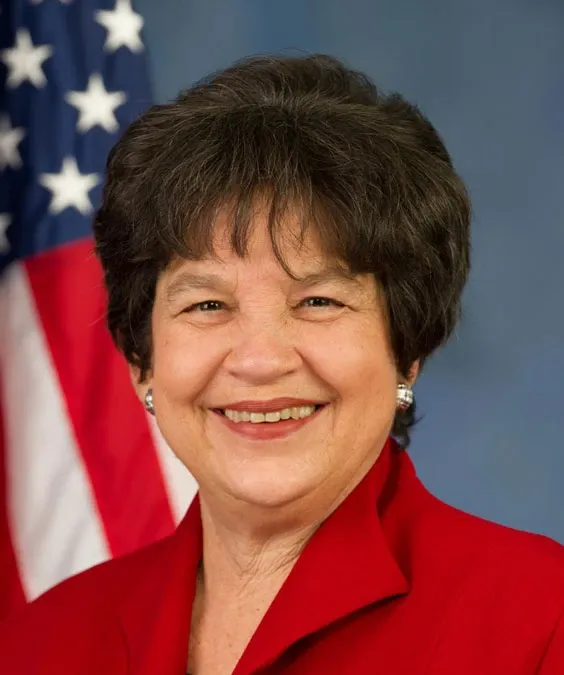
Kathy Castor
The Public Record
Kathy Castor is a U.S. Representative for Florida's 14th congressional district, having served since January 4, 2007. A member of the Democratic Party, she has been an advocate for various issues, including healthcare, education, and environmental protection. Throughout her tenure, Castor has worked on initiatives aimed at improving access to healthcare and addressing climate change. She has also focused on education reform and supporting local communities in Florida.
Apr 6, 2022
China has increased emissions 4 tons for every one ton of emissions we have reduced.
Apr 6, 2022
There's a common theme here: the costs of climate change and the rising costs of energy seem to always fall on working families.
Apr 6, 2022
I strongly urge Congress to enact the bi-partisan, HOPE for HOMES Act (H.R. 3456).
Apr 6, 2022
This important legislation aims to help ALL Americans by providing Home Owners Manage Energy Savings (HOMES) rebates.
Apr 6, 2022
Investing in cleaner, cheaper technologies will also go a long way in building true American energy independence and security.
Apr 6, 2022
These investments will not only lower utility bills and reduce greenhouse gas emissions but will also improve occupant comfort and health.
Apr 6, 2022
Federal investment in energy efficiency will put money back in the pockets of Americans.
Mar 31, 2022
last year alone we had twenty climate-fueled disasters that caused at least $1 billion in damages.
Mar 31, 2022
Methane is a potent greenhouse gas and is responsible for about 30% of global warming in the modern era.
Mar 31, 2022
I want to thank Mr. Carter for his comments on trees, and I think that the benefits of trees sequestering carbon are welcome.
Mar 31, 2022
when you consider that really the only emission reduction strategy that also provides resilience benefits that can cost-effectively save lives, it even becomes more absurd that we don't focus on it more.
Mar 31, 2022
I'm excited to recognize our two distinguished guests for this important hearing so we can learn from them: Governor Michelle Lujan Grisham, of New Mexico, and Governor Mark Gordon, of Wyoming.
Mar 31, 2022
You cannot oppose demand reduction and oppose supply reduction and claim to be in support of lowering fossil fuel costs.
Mar 31, 2022
Grasslands and shrublands, native grasses and shrubs have long, deep roots that sequester a lot of carbon.
Mar 31, 2022
But there is so much more to be done--and quickly--as the costly impacts of the climate crisis continue to grow and the window to act to avoid the worst impacts is rapidly closing.
Mar 31, 2022
Ecosystem restoration and conservation are key tools in adapting to and mitigating the risks from climate change.
Mar 31, 2022
I am delighted that in the 2 years since my colleagues across the aisle are now opposed to Vladimir Putin.
Mar 31, 2022
Natural solutions that sequester carbon should also be central to any plan to achieve net-zero emissions.
Mar 31, 2022
For years it has been clear that Sea Change Foundation has no connection to secret Russian money.
Mar 31, 2022
We need robust Federal rules to find and repair leaks from both new and existing sources, including marginal wells, and we need to end routine venting and flaring, which wastes energy and harms the public health.
Mar 31, 2022
Coasts and marines also huge opportunities for resilience in carbon abatement.
Politicians like Kathy Castor