Jul 9, 2015
If they have sturdier structures, over time, they are going to be able to access property insurance at more affordable levels.
The Public Record
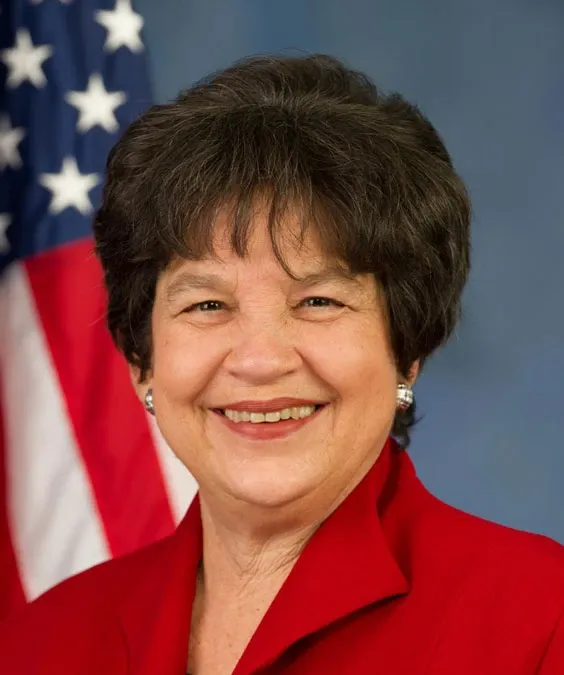
Kathy Castor is a U.S. Representative for Florida's 14th congressional district, having served since January 4, 2007. A member of the Democratic Party, she has been an advocate for various issues, including healthcare, education, and environmental protection. Throughout her tenure, Castor has worked on initiatives aimed at improving access to healthcare and addressing climate change. She has also focused on education reform and supporting local communities in Florida.
If they have sturdier structures, over time, they are going to be able to access property insurance at more affordable levels.
I would also like to thank my colleague and cosponsor Brett Guthrie. He is a good friend.
Ensuring accountability in managed care is vitally important to us because it is where most of our beneficiaries get their care.
You know, the passage of Medicare and Medicaid 50 years ago, through amendments to the Social Security Act, really are something to celebrate.
In Medicare, you work hard all of your life, and you retire, you are not going to fall into poverty because of a health condition.
Under Medicaid, we are not going to allow children across America, no matter what station they are born in in life, to suffer the consequences of a debilitating disability.
I would also like to thank Chairman Emeritus Barton for raising the issue of the Ace Kids Act.
I appreciate the House's consideration. Mr. Chairman, I rise today to offer an amendment to restore brownfields funding to fiscal year 2015 levels and to make the point that when we help redevelop contaminated properties, we generate a…
This is an important account to beef up. Remember, we are under the sequester caps, and then we are $4 million under the budget request even with this amendment. Now, the Secretary's Office is the best place to go for an offset. The…
I demand a recorded vote. The Acting CHAIR. Pursuant to clause 6 of rule XVIII, further proceedings on the amendment offered by the gentlewoman from Florida will be postponed. The Clerk will read. The Clerk read as follows: administrative…
I have an amendment at the desk. The Acting CHAIR. The Clerk will report the amendment. The Clerk read as follows: Page 36, line 8, after the dollar amount, insert ``(reduced by $1,913,000)''. Page 62, line 8, after the dollar amount…
I thank the ranking member. Mr. Chairman, this is the climate change denial bill. Don't be fooled by its name. Ignoring the impact of climate change will heap huge costs on taxpayers. This bill is a disservice to America. And in addition…
I want to thank Representatives Clark and Stivers for their work on H.R. 1462 especially, Protecting Our Infants Act of 2015.
I think it is clear that we need additional efforts and resources to address the challenges of neonatal abstinence syndrome.
I find it astonishing that some States, some Governors find it a burden to take care of the most disadvantaged people in our society.
I am a little budgeteer from Oregon, a small business person, if someone is going to pay 90 percent of the cost of something, I am going to find 10 percent of the money to get it done.
But each waiver has a time limit, because demonstration projects are intended to be analyzed to ensure they are working, and that they are using taxpayer dollars wisely.
And we say that the States, and these are some of the principles, States and the Federal Government cannot spend more than they would have spent without the waiver.
It was the Congress, through amendments to the Social Security Act and laws relating to Medicaid, that granted States new and broad flexibility to test what works.
Medicaid really it serves primarily children, the disabled population, elderly in nursing homes...
it is a smarter use of taxpayer dollars to make sure that people get coverage so they get the primary and preventative care they need
I just want to point out that part of that letter is inaccurate when it comes to the State of Florida...
the low-income pool in Florida doesn't cover a single person, and uncompensated care pools don't cover people.
The law required group health insurance plans covering mental health and substance abuse services to cover them at parity with physical health services.
Politicians like Kathy Castor