Apr 21, 2009
Congress went along with that, on the condition that when Rocky Flats was finished, the savings would be applied to accelerate cleanup at other sites.
The Public Record
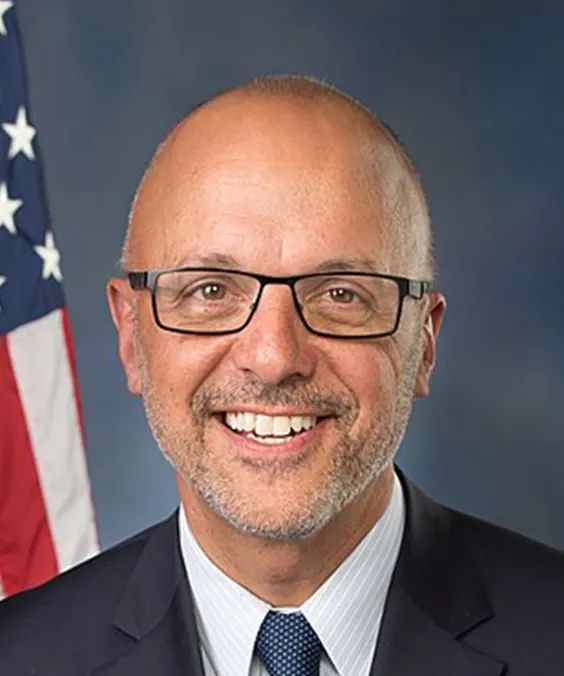
Bill Nelson is an American politician and attorney who served as a United States Senator from Florida from 2001 to 2019. A member of the Democratic Party, he previously represented Florida's 9th congressional district in the U.S. House of Representatives from 1993 to 2001. Nelson also held the position of Florida's Insurance Commissioner from 1995 to 1999, where he focused on consumer protection and insurance reform.
Congress went along with that, on the condition that when Rocky Flats was finished, the savings would be applied to accelerate cleanup at other sites.
It's a pleasure to work with you. We have a lot of work to do in this subcommittee.
Senator Bill Nelson. Senator Begich, I'm going to call on you, and Senator Sessions will chair the meeting until I can get back.
All right. Now, are the projects that are going to be funded first with the stimulus bill money, is this addressing the high-risk and the most cost-effective projects?
So, when you use the term 'shovel-ready,' you're talking about the projects you've just described.
Okay. Now, let me ask you, on the stimulus bill projects, how did you decide what projects were going to be funded?
The vast majority of that life-cycle cost increase was because of assumptions that were too aggressive and lack of reality in the funding profile.
All right. Of the material remaining, how do you go about accounting for all of that, of what you're not going to clean up?
I share your concerns on behalf of the money and the taxpayers who are footing the bill for this cleanup.
What is it that you're cleaning up, and why is it necessary to spend all this money?
Under the stimulus bill, the American Recovery and Reinvestment Act of 2009, the Department of Energy (DOE) received $5.1 billion to address a substantial backlog of these cleanup projects.
Well, then, as Senator Webb has stated, on 10 April 2009, DOD announced their intent to review the Navy's homeporting decision in the QDR.
Are those metrics--you mentioned the Intelligence Community (IC). Are these metrics such that we'll be able to discuss them in public?
Going forward, we will not blindly stay the course. Instead, we will set clear metrics to measure progress and hold ourselves accountable.
I would also like to express my personal appreciation to Senator Bill Nelson for his commitment to helping affected homeowners.
In Orlando, you split the functions between the tower and the radar functions, but in Miami you kept them together.
So, what do you do, install some of the heads-up equipment in the cockpit and, in South Florida, you're broadcasting off of the satellites instead of through your normal communication?
So, you're saying that there's no difference with regard to splitting it, or not splitting it, with testing ADS-B.
Politicians like Bill Nelson