Jun 22, 2021
But the pressure on the Great Lakes as a result of climate change only raises the importance of research and work in preserving what is really an international treasure.
The Public Record
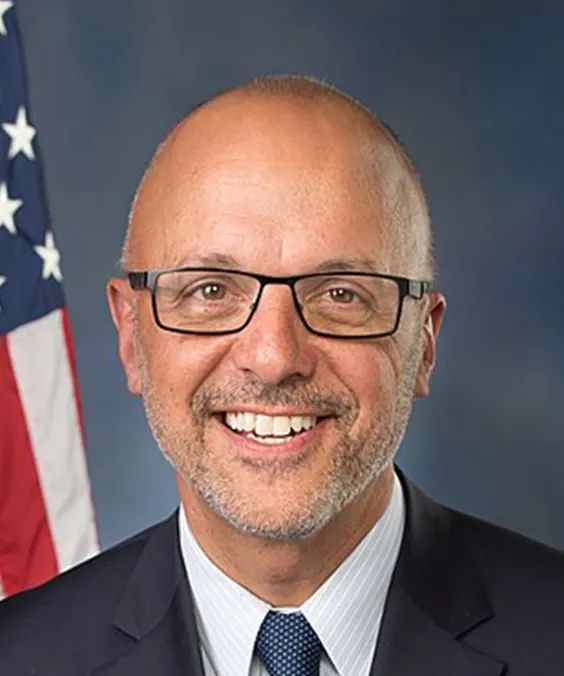
Bill Nelson is an American politician and attorney who served as a United States Senator from Florida from 2001 to 2019. A member of the Democratic Party, he previously represented Florida's 9th congressional district in the U.S. House of Representatives from 1993 to 2001. Nelson also held the position of Florida's Insurance Commissioner from 1995 to 1999, where he focused on consumer protection and insurance reform.
But the pressure on the Great Lakes as a result of climate change only raises the importance of research and work in preserving what is really an international treasure.
It's very important in another part of our government that that doesn't get out of our control, and into somebody's hands who can use it to build a bomb.
Yes, I can give you some information that'll reduce your heartburn. And, indeed, the spacesuit program is intended to stay at Johnson.
We can land a rover on Mars, we can beat a pandemic, and with science, hope, and vision, there's not a damn thing we can't do as a country.
It's a demonstration to the world of who is the pre-eminent power in the world.
Well, let's be realistic, a lot of people don't know that, for example, what the Source Selection Board, picking out of the existing competitors--NASA had asked for $3.4 billion for that competition.
STEM is--we've had some discussion here already, extensively, about the importance of STEM.
The extensive sharing of data among U.S. Government agencies with NASA is just unbelievable.
America never wants to give up its DNA as explorers, adventurers, because always we've had a frontier.
NASA has a need for that. And if you all do a jobs bill, I hope you would consider NASA in that jobs bill.
In your State and my State, we have an expression, there are more ways than one to skin a cat.
You all ought to have a--go down--to come down and see the most powerful rocket ever.
If you think back, when we were challenged before, and the Soviets took the high ground, and they shocked us out of our wits with Sputnik...
That's why we have something known as the Artemis Accords, which we are getting other nations to sign.
And I believe, Madam Chairwoman, that we are at a critical inflection point in our country, in our history, and in our future in restoring science to its proper place in informing our decisionmaking, and growing and diversifying our STEM…
We've got to have a way to know in advance, well in advance, to save our astronauts so that they don't get fried.
I suspect that what's going to happen, if we can get people really excited about us going back to the Moon, and on to Mars...
NASA's responsibility is to make sure that it is safe, particularly when you put humans strapped in to all of that explosive potential.
Politicians like Bill Nelson