Apr 17, 2023
The SEC has never affirmatively stated that any other popularly traded digital asset is not a security, and senior officials have often expressed the view that the 'vast majority' of digital assets are in fact securities.
The Public Record
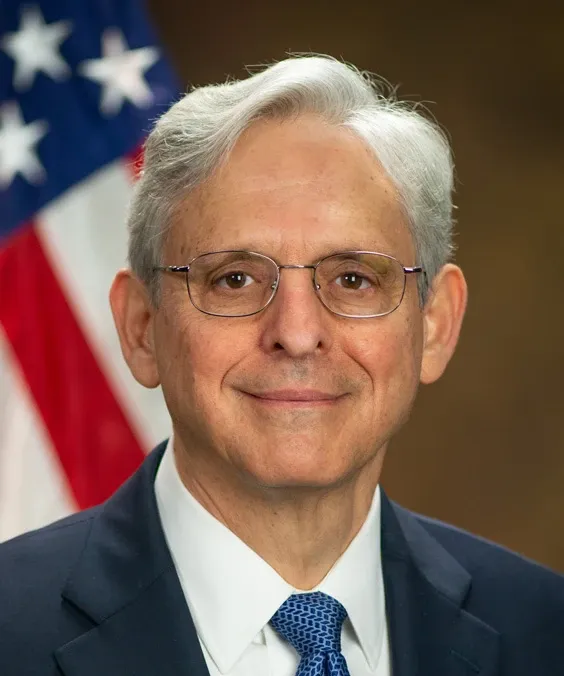
Gary Gensler is the current Chair of the U.S. Securities and Exchange Commission (SEC), having been appointed by President Joe Biden in April 2021. A member of the Democratic Party, Gensler has a background in finance and public service, previously serving as the Chair of the Commodity Futures Trading Commission (CFTC) from 2009 to 2014. He is known for his focus on financial regulation and consumer protection, emphasizing the importance of transparency and fairness in the financial markets. Gensler has also been a professor at the MIT Sloan School of Management, where he taught courses on blockchain technology and digital currencies.
The SEC has never affirmatively stated that any other popularly traded digital asset is not a security, and senior officials have often expressed the view that the 'vast majority' of digital assets are in fact securities.
If you want to raise money in the U.S. public markets, then you have to follow accounting standards that properly account for your liabilities.
I think a lot of our agenda at the SEC is about ensuring that we go as many years, as many decades as possible that we have the best capital markets.
There is risk in both sectors. There is risk in the decentralized, and there is risk in the centralized.
Retail investors have greater access to markets than at any time in the past.
It would undermine the base of our capital markets, U.S. Treasuries, or the risk-free part of our capital markets.
It puts a dose of uncertainty into markets, but it becomes particularly problematic the closer one might get to whatever deadline that is.
I think we do. We could use more resources, but I do think we have the authorities.
I think that we benefit in this country by the markets and small businesses being able to raise capital in a well-regulated market.
I have never seen a field that is so noncompliant with laws written by Congress.
Yes, I do believe that we have the authorities we need and the laws to protect the investors.
Congress painted with a broad brush to protect the investing public when the investing public is basically investing or betting on a group of entrepreneurs.
At its core, when Congress set up the SEC, it was about protecting the investing public and thus the capital formation on the other side with this disclosure.
I think it is. And I think, to the chair's question, it is about capital formation and investors because investor protection means more people are confident in a market.
Less dedicated lawyers and investigators and economists in an agency like ours means less protection for the public.
Four of our divisions are run by extremely talented individuals that are willing to serve their country and partake in this great experiment called democracy and to actually help us.
There is some--and the public is basically giving up their hard-earned dollars to invest in that token. And that token entrepreneur should give them full, fair, and truthful disclosure.
I have disclosed here; I think Senator Van Hollen still might call me on my cell phone. I have known him for 23 years.
If this committee were to see fit, and want us to have more resources, we could use them.
Politicians like Gary Gensler