Sep 3, 2018
That gives the President virtually unchecked power. And in this real world, that is a dangerous prospect for us, is it not?
The Public Record
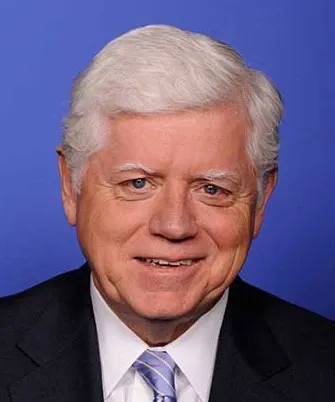
Richard Blumenthal is an American lawyer and politician serving as the senior United States senator from Connecticut since 2011. A member of the Democratic Party, Blumenthal has focused on issues such as consumer protection, healthcare, and veterans' affairs during his tenure. He previously served as the Attorney General of Connecticut from 1991 to 2011, where he gained recognition for his advocacy on behalf of consumers and his efforts to hold corporations accountable. Blumenthal has been an active voice in the Senate, participating in various committees and addressing key national issues.
That gives the President virtually unchecked power. And in this real world, that is a dangerous prospect for us, is it not?
The test that you are imposing here is out of touch with the real world and the impact on real lives.
But assault weapons are equally destructive, and the evidence for them is equally compelling, that is, the evidence for a ban on assault weapons, which is what the majority in Heller II in your court found, did it not?
I would like you to tell me that I am wrong, and I would like you to tell me that you would put aside your Heller II dissent, and as a member of the United States Supreme Court, if confirmed, you would uphold a ban on assault weapons.
I just want to express to you my fear and my deep concern that you will not apply the law to the facts.
Do you think the President of the United States has that unilateral authority to nullify protection for Connor?
Clearly, Heckler does not say that there are no limits, but for the sake of real-world impacts, I think there must be impacts.
He talked to an enormous number of people based on my understanding in those 12 days.
I want to talk to you now about real-world consequences; that is, impacts in the real world on real people of the decisions that courts make.
President Trump's attacks on the judiciary have been blatant, craven, and repeated.
I think the heroes of this era will be the independent judiciary and our free press.
You have dodged the question. You have ducked it. It is the same question again and again and again.
So, you are saying, no, you have had no discussions. You have not talked to anyone in the White House about Robert Muller or the special counsel investigation.
It is pretty simple English. Have you talked about the special counsel with anyone in the White House, anybody who works for the President of the United States?
I believe, thanks to that exchange, that an email has now been made public in which you took exactly that position, and you argued in that email that Roe can be overturned.
What are they concealing by this procedure? What are they afraid the American people will see?
We are dealing here with a lifetime appointment. Nothing we do here is more serious than confirming a Justice on the United States Supreme Court.
Shame on my colleagues if they conceal them now and deny us the benefit of questioning this nominee who comes before us for the last time today.
There has been a lot of commentary over the last couple of days about how we are in uncharted and unprecedented territory here, that the process has broken down, reflecting what is happening in our Nation generally.
The President may decline to enforce a statute that regulates private individuals when the President deems the statute unconstitutional, even if a court has held or would hold the statute constitutional.
The enforcement of the Affordable Care Act is a matter of prosecutorial discretion
Politicians like Richard Blumenthal