Jun 13, 2023
As one of the authors of the SESTA/FOSTA bill, I happen to be very proud of it.
The Public Record
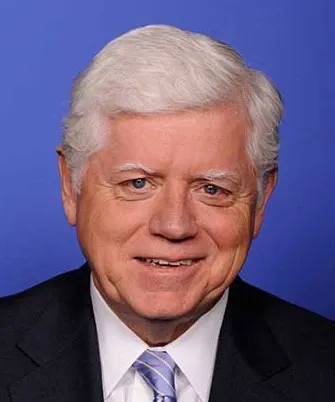
Richard Blumenthal is an American lawyer and politician serving as the senior United States senator from Connecticut since 2011. A member of the Democratic Party, Blumenthal has focused on issues such as consumer protection, healthcare, and veterans' affairs during his tenure. He previously served as the Attorney General of Connecticut from 1991 to 2011, where he gained recognition for his advocacy on behalf of consumers and his efforts to hold corporations accountable. Blumenthal has been an active voice in the Senate, participating in various committees and addressing key national issues.
As one of the authors of the SESTA/FOSTA bill, I happen to be very proud of it.
Whenever these issues of ethics are discussed, I can't help but thinking back to my days as a law clerk for Justice Harry Blackmun who refused to have dinner with people who might conceivably at some point in the future have a case before…
It's not acceptable to say, 'It's not my problem.' We wish the kids the best. The kids are in danger.
So I invite my Republican colleagues who speak vociferously and vehemently on this topic to join the Child Labor Prevention Act.
We need to confront the broken system that currently is our immigration legal apparatus.
The VA cannot operate in isolation. It has to seek partnerships with community groups like the Connecticut Harm Reduction Alliance.
I have believed for some time that one of the challenges is outreach, whether it is through the media or person-to-person contact.
I'm not willing to let the courts legislate. I think we have a responsibility to legislate.
We want to encourage innovation and startups in AI the same way that Google and Facebook were able to take on the IBMs of the world.
We're still trying to make up for lost time there through the Kids Online Safety Act and other measures.
Well, my takeaway from this panel is that we need to clarify Section 230 to say it doesn't apply to AI.
As one of the authors of the SESTA/FOSTA bill, I happen to be very proud of it.
But I think all of you would agree that there's a need for thought and consideration here before these models are just thrown into the wild, so to speak.
Open source software obviously can be an enormously important resource for innovation and invention, for science, standards, transparency.
Senator Hawley and I wrote to Meta earlier this week about an AI model they released to the public in February.
For me, what keeps me up at night, one of the main reasons to stay awake when thinking about AI is the impact on our economy.
I think everyone has agreed regulation is necessary, maybe through some kind of Federal agency, call it an administrative agency.
The ones who would love it the most are the Chinese, our competitors in other jurisdictions.
I guarantee that in China or in many of the other countries that are potential competitors, there are not groups like this one voluntarily--voluntarily pursuing research, innovation, invention in this area.
I recently joined a number of colleagues in supporting legislation. I believe it is known colloquially as the Dole Act.
Unfortunately, it was blocked from passage. I am hoping that maybe my Republican colleagues this time around will join in supporting it.
I want to talk about one specific area that is important to nursing homes, which is the shortage of nurses.
Politicians like Richard Blumenthal