Sep 13, 2011
Shortages of drugs around the country mean that hospitals are unable to meet the demand for workhorse medicines
The Public Record
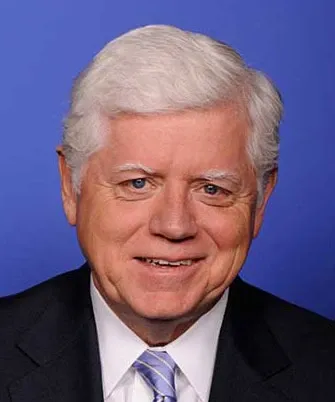
Richard Blumenthal is an American lawyer and politician serving as the senior United States senator from Connecticut since 2011. A member of the Democratic Party, Blumenthal has focused on issues such as consumer protection, healthcare, and veterans' affairs during his tenure. He previously served as the Attorney General of Connecticut from 1991 to 2011, where he gained recognition for his advocacy on behalf of consumers and his efforts to hold corporations accountable. Blumenthal has been an active voice in the Senate, participating in various committees and addressing key national issues.
Shortages of drugs around the country mean that hospitals are unable to meet the demand for workhorse medicines
Dear Senator Blumenthal, as I sit down this morning to write you this letter, we still have no electricity; it is Friday, September 2nd, 2011, six full days since Hurricane Irene moved over our state.
I believe strongly mandatory penalties may be appropriate, but certainly enhanced penalties, just as we've done through the Adam Walsh Act for child abuse.
I believe that there needs to be more done by the Federal Government, an Office of Elder Justice in the United States Department of Justice.
Probate court rulings are not always in keeping with the APS' service provider's recommendations, resulting in the progress made with the elder to be negated by the court ruling.
I have been in your situation before serving as a Senator, testifying down in Washington and having to catch a plane in the other direction.
Maybe you could comment on the fear of retaliation as a reason for non-reporting and other reasons that there is under- or nonreporting.
What percentage are seniors that are involved in putting together programs and legislation? I think the question really is how involved are seniors?
Is it a requirement that social workers who work in the protective services program have any educational training in geriatrics?
What is going to happen to new programs in this environment? Are they going to have a chance?
So I'm wondering whether more emphasis on culpability and prosecution would be worthwhile.
I'm going to paraphrase rather than quote--the emphasis on service rather than what you call culpability, which I interpret to mean law enforcement or prosecution, would it be helpful do you think for there to be more emphasis on the law…
Would it be helpful to redefine or recharacterize Federal programs so as to be eligible for that funding?
I'm interested in your comment that Connecticut has no adult protective services, and therefore receives no money from the Federal Government for APS.
Towns respond differently, and law enforcement agencies in those towns respond differently.
Was the uptick around the holiday time in--you mentioned thefts and robberies. Was it primarily home intrusions, or were they financial exploitation of other kinds?
Financial exploitation hasn't been addressed in the same way physical and emotional abuse, and I think as time goes on we'll see more and more reporting of the issue.
And do you have an explanation as to why financial exploitation seems to be underreported based on your experience and your study?
Do you think that institutions of the kind for which you work are doing enough?
One of the questions that really, I think, follows from that comment... what role do you think financial institutions can and should play in the detection of these kinds of problems?
I will be very blunt, which is that a lot of people would not want what they might see as the embarrassment...
Politicians like Richard Blumenthal