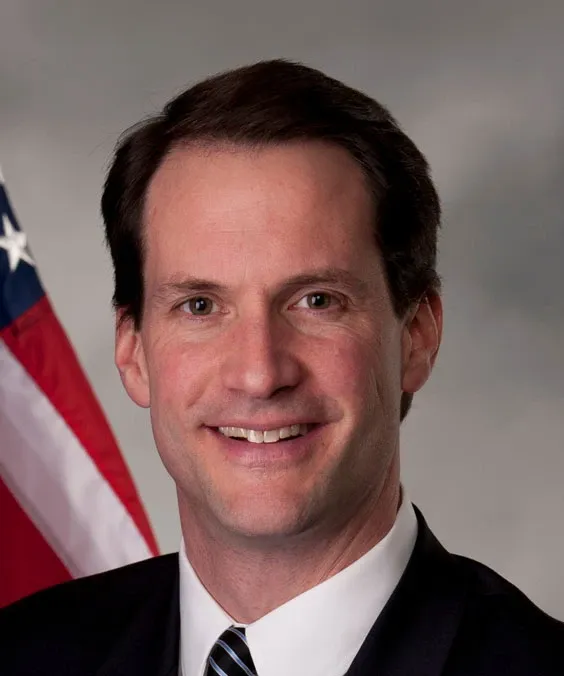
Mar 25, 2009
The term 'great American' is tossed around here a lot, but in my opinion, Mayor Bloomberg really is a great American.
The Public Record
Joseph Lieberman is an American politician and attorney who served as a United States Senator from Connecticut from 1989 to 2013. Initially a member of the Democratic Party, he gained national prominence as the party's nominee for Vice President in the 2000 election alongside Al Gore. After losing the election, Lieberman continued to serve in the Senate, where he became known for his centrist views and willingness to cross party lines, particularly on issues such as national security and energy policy.
The term 'great American' is tossed around here a lot, but in my opinion, Mayor Bloomberg really is a great American.
I would like you to look into the program and get back to me on where that is.
Yesterday, the Committee held a hearing on the Mexican drug cartel violence, both what is happening there inside Mexico and what we can do to help President Calderon.
I believe, and I am happy to note, that each year, it has become stronger, and I do not think there is any question that the country is safer as a result of the Department's efforts.
I'm going to give you a request right now, that when the President's budget does come in detail, I invite each of you to respond.
We have some big decisions to make. It may be that we will ultimately not make a big decision about the size of the Army, although I think we should.
We also need to increase our officer corps to provide the kind of advisory capability that is really crucial to our national security.
So bottom line, you would continue on the current course and really try to accelerate it?
We need a network that doesn't go blind or become useless when satellites are not available.
I think Pete's historical example is inapropos to the current moment. That was a period of strategic pause between two global conflicts.
Therefore, with FCS you should look at it with a view to modifying it to make sure that it meets those current challenges.
I look forward to working with my colleague and friend, Senator John Thune, in his capacity as ranking member.
Everything--every policy, every strategy, every initiative launched by the Federal Government has an immediate and long-term local impact.
I support that, but I suppose President Obama at least seemed to say to me when he spoke about it, it is not likely to pass Congress.
The violence will not be contained until the Mexican drug cartels are destroyed.
In the first 2 years, fiscal year 2008 and 2009, Congress actually appropriated less money than was requested.
We have to have something in the way of immigration reform to tell us do we want a workforce in this country that is an immigrant workforce or do we not?
Politicians like Joe Lieberman