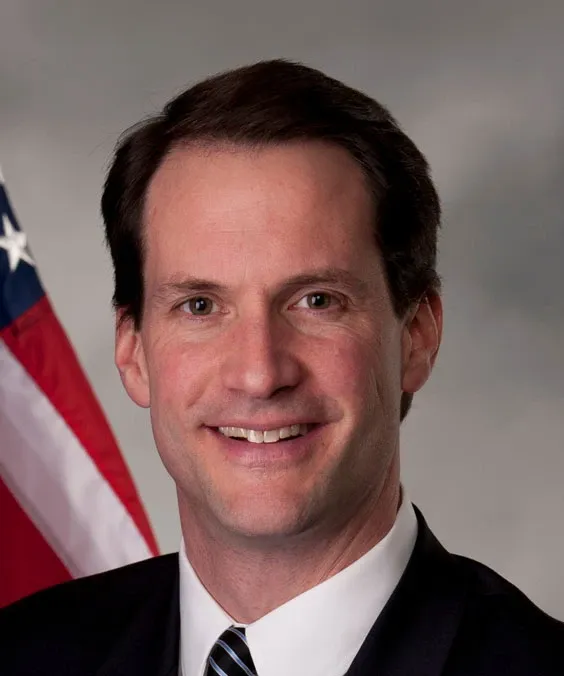
Joe Lieberman
The Public Record
Joseph Lieberman is an American politician and attorney who served as a United States Senator from Connecticut from 1989 to 2013. Initially a member of the Democratic Party, he gained national prominence as the party's nominee for Vice President in the 2000 election alongside Al Gore. After losing the election, Lieberman continued to serve in the Senate, where he became known for his centrist views and willingness to cross party lines, particularly on issues such as national security and energy policy.
Nov 18, 2009
We are conducting this investigation because we believe it is our responsibility to do so according to law and Senate rules.
Nov 18, 2009
I assured them that our Committee understood and respected the difference between their criminal investigation and our congressional investigation.
Nov 18, 2009
Most of these plots, except for the ones that were lone wolves such as the Little Rock case and presumably Major Hasan's case, at least what we know of him now, were true groups and have been stopped.
Nov 18, 2009
I am not here to second-guess the hard-working public servants who investigated this case, but to offer, based on my experience, how we might improve the system and better protect our men and women in uniform.
Nov 18, 2009
The purpose of this Committee's investigation is to determine whether that attack could have been prevented.
Nov 18, 2009
Our challenge is to make sure that we have not allowed new silos to build up.
Oct 28, 2009
I hope that this Committee and my colleagues do not make the mistake we too often make around here of letting the perfect get in the way of the good.
Oct 28, 2009
We strongly believe, as part of the debate to increase the debt limit, Congress needs to put in place a special process that allows Congress and the administration to face up to our Nation's long-term fiscal imbalances and allows for…
Oct 28, 2009
The system is broken. In my 29 years in Congress, I have never... seen more partisanship and divisive Congress than I have today.
Oct 21, 2009
What really troubles me about this is the matter that we have talked about, which is the difficulty and really ultimately the impossibility of exercising our oversight authority with regard to people in the White House
Oct 21, 2009
A democracy requires accountability, and accountability requires transparency.
Oct 21, 2009
We both share a desire to do something about this to help Congress uphold our constitutional responsibility for oversight.
Oct 14, 2009
This is a no-brainer for us in terms of a good deal for the Federal taxpayer.
Oct 14, 2009
Simply put, end to end, extending benefits to same-sex partners is a good, sound business decision.
Oct 14, 2009
Providing Federal employees with domestic partner benefits will bring us a significant step closer to the principle of equality under the law.
Oct 14, 2009
It is a good point, and it is certainly validated by the differing opinions among different age groups on questions of gay rights generally, including this one.
Oct 14, 2009
Just as important, this bill shows that we recognize the value of every American family and are committed to the ideal of equal treatment under the law that our Founding Fathers envisioned.
Politicians like Joe Lieberman