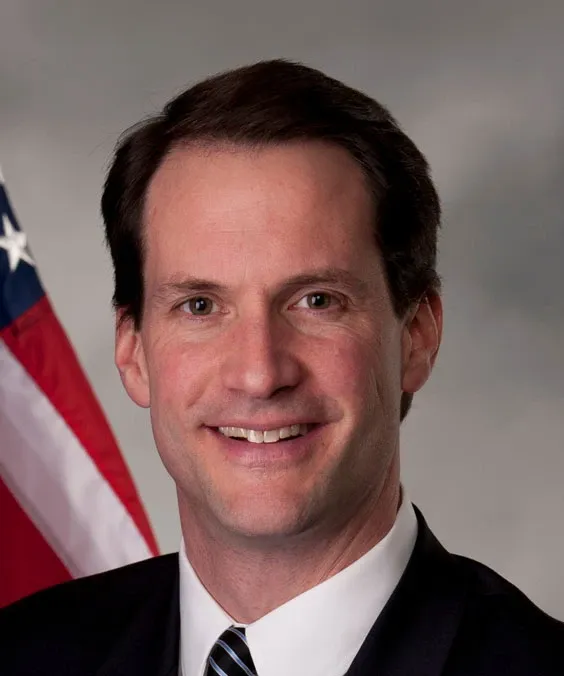
Joe Lieberman
The Public Record
Joseph Lieberman is an American politician and attorney who served as a United States Senator from Connecticut from 1989 to 2013. Initially a member of the Democratic Party, he gained national prominence as the party's nominee for Vice President in the 2000 election alongside Al Gore. After losing the election, Lieberman continued to serve in the Senate, where he became known for his centrist views and willingness to cross party lines, particularly on issues such as national security and energy policy.
Nov 2, 2015
We hope, as this hearing goes on, you will feel strongly enough about at least some of the recommendations we make here that you will become champions for them.
Nov 2, 2015
I want to thank you specifically for convening this hearing on our report less than a week after we issued it.
Oct 27, 2015
So a few months after 9/11, and the anthrax attacks really after 9/11, I do not know if Chuck Ludlum is here.
Oct 27, 2015
But we are not--I mean, one of the major recommendations that comes out of this is that we still have not figured out how to leverage the ingenuity and innovation of the pharmaceutical sector of our economy to get involved in developing…
Oct 27, 2015
I had the same impression that you did, that the WHO did not respond as well or as quickly as we would have liked.
Oct 27, 2015
The military is way ahead, in our opinion, of what the Department of Homeland Security has in the BioWatch program.
Oct 27, 2015
We are both wasting resources, but we are also not preparing ourselves adequately to deal with threats to animals and humans.
Oct 27, 2015
So I mentioned before that if you had to choose one department, it would be the Department of Homeland Security because this is a homeland security threat.
Oct 27, 2015
I think it is critically important that this work not stop at this point where we are just looking at what is happening within our borders.
Oct 27, 2015
This is really an appeal to the President to designate the Vice President to do this.
Oct 27, 2015
We should give this responsibility to the Vice President of the United States
Oct 27, 2015
It would be irresponsible of us to leave the field, drop the report and go back to whatever we are doing.
Oct 27, 2015
The divisions between human health and animal health or human disease and animal disease are artificial.
Oct 27, 2015
You want to know if there is an infectious disease epidemic beginning to spread in the country.
Oct 27, 2015
As a choice between creating a new czar and making the Vice President of the United States now and in the future responsible for some critical areas, coordinating them, I would choose the Vice President.
Oct 27, 2015
Plan B would be somebody like the czar, I mean, somebody in the White House so that they had the implicit authority of the Presidency to coordinate.
Oct 27, 2015
Our judgment is that it is an old system, it is using old technology, and, frankly, it is not up to the challenge.
Oct 27, 2015
Well, we understand that there is a vaccine coming along, but I am actually thinking more about---yes, OK. So the vaccine is coming along, but it has not been approved yet. And the sooner the better.
Oct 27, 2015
I think that Vice President Biden might be challenged and intrigued by this possibility and want to see if in his last year in office he can bring this together to work better.
Oct 27, 2015
So, to a certain extent, probably the wrong way to describe it, we backed into the recommendation that the Vice President be the leader of this effort.
Politicians like Joe Lieberman