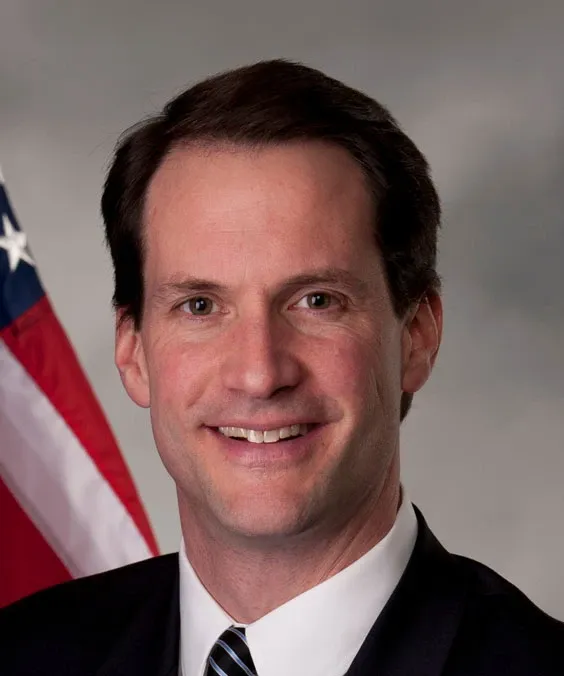
Joe Lieberman
The Public Record
Joseph Lieberman is an American politician and attorney who served as a United States Senator from Connecticut from 1989 to 2013. Initially a member of the Democratic Party, he gained national prominence as the party's nominee for Vice President in the 2000 election alongside Al Gore. After losing the election, Lieberman continued to serve in the Senate, where he became known for his centrist views and willingness to cross party lines, particularly on issues such as national security and energy policy.
Feb 13, 2012
I think perhaps of all the Arab Spring uprisings, this is the one that has the greatest prospect to succeed, but they need our help to do so.
Feb 13, 2012
It actually took quite a while for us to build the political will both here and in Europe to get involved there.
Feb 13, 2012
Of course, the goal of their efforts is to defeat the LRA and to presumably capture or kill its leader.
Feb 13, 2012
I hope we can find a way to make clear in Chicago that the door to NATO has not been closed to other nations, particularly I am thinking of Georgia, but there are others as well.
Feb 13, 2012
This rebalancing of our foreign and military policy toward the Asia Pacific is not just an initiative on our part in pursuit of our economic and security interests, but it is really a reaction to a kind of demand from within the region…
Feb 13, 2012
I worry that as we get this move toward us and urging us to be more involved for mutual economic security, even political governance interests, that we're sending a message out by the cuts in defense that are part of the Budget Control Act…
Feb 13, 2012
Let me ask you one follow-on question about the really tragic events in Afghanistan in the last week or so.
Feb 13, 2012
I share the consternation that Senator McCain expressed about the excess of rhetoric and deficiency of any real action to assist the opposition in Syria.
Feb 13, 2012
I hope we can find ways to add on to what the administration has requested pursuant to the BCA.
Feb 13, 2012
The role that America has played in providing stability and security in the Asia-Pacific region over the last 6 decades, as you've said, has been one of the preconditions of the enormous growth and prosperity in the region over that time.
Feb 13, 2012
How can the force be prepared to conduct this particular 'primary mission' without the necessary manpower?
Feb 13, 2012
While the new Defense Strategic Guidance states that ground forces will not be sized for large-scale stability operations, it also lists 'stability and counterinsurgency operations' as one of the 'primary missions' of the U.S. military.
Feb 13, 2012
I believe it is important to note that DOD never actually sized the ground forces for large-scale stability operations.
Feb 13, 2012
We strongly support the Lieberman-Collins-Rockefeller legislation, to get us in the proper place in dealing with the cyber threat
Feb 13, 2012
Never has there been in my almost 49-year career in intelligence a more complex and interdependent array of challenges than we face today.
Feb 13, 2012
The SOF can only be special if there's a conventional force that allows them to conduct their operations and shape the environment.
Feb 13, 2012
Is supportive of the bipartisan legislation being introduced by Senators Lieberman and Collins
Feb 13, 2012
With all respect, I consider this budget to represent unacceptable risk to our national strategy, and I hope members of this committee across party lines will work together to reduce that risk in a fiscally responsible way.
Feb 13, 2012
The U.S. military and our national security are being asked to pay the price for the fiscal irresponsibility of our government over the last decade
Feb 13, 2012
I share many of the concerns my colleagues have already expressed concerning the shortfalls in funding and capacity for the modernization of our nuclear weapons.
Feb 13, 2012
The nation requires an executable plutonium production strategy to support the deployed force and reduce reliance on the nondeployed stockpile.
Feb 13, 2012
While I am extremely confident in today's deterrent force, deferring modernization does increase risk across the nuclear enterprise.
Politicians like Joe Lieberman