Apr 11, 2002
Last October, Senator Specter and I introduced legislation to establish such a cabinet-level Department of National Homeland Security.
The Public Record
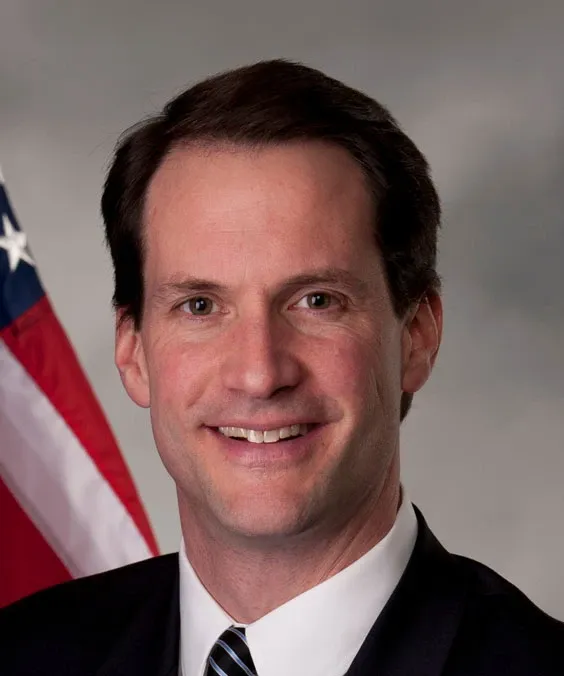
Joseph Lieberman is an American politician and attorney who served as a United States Senator from Connecticut from 1989 to 2013. Initially a member of the Democratic Party, he gained national prominence as the party's nominee for Vice President in the 2000 election alongside Al Gore. After losing the election, Lieberman continued to serve in the Senate, where he became known for his centrist views and willingness to cross party lines, particularly on issues such as national security and energy policy.
Last October, Senator Specter and I introduced legislation to establish such a cabinet-level Department of National Homeland Security.
it is fundamental to the accountability of a person who is exercising, quite correctly, the kind of authority he is exercising
we ought to figure out how to--there is a practical problem, which I think we could work on together
I think Senator Lieberman and I--we have responsibility not just for the Army here, but other programs and other services--
But you are also saying obviously that that does not diminish the priority that the Army puts on the armed reconnaissance function?
Thank you for an important and very constructive discussion here this afternoon.
We want to see that this is a realistic plan that does not have too much risk associated with it.
It strikes me that I should say what I suppose is self evident and--it has been said elsewhere--that we are extremely grateful for the service that the Army has given in Operation Enduring Freedom.
So you might put it up initially with less than the fully desired capabilities. Is that what I am hearing?
You could probably do it with the other services, as well--that though the $48 billion increase proposed for the DOD budget is large, you can make a case to go higher than that.
We know you have to take that risk, but the risk seems to be pretty much loaded on the Legacy Force, and not the modernizing.
So the bottom line in balancing the risk, in what I know is your desire to get to the Objective Force, you do not feel you can cut that below the six IBCTs?
We need to flesh this out and understand the levels of risk and what decisions are being made.
There is the $1.7 billion shortfall, and I know that the Army put more money into this fiscal year 2003 budget.
We support you fully and I think we have backed it up with more money from this subcommittee than from the last two administrations.
Why would it not make more sense to limit modernization to fewer than the three and a third divisions in the counter-attack corps, and, again, take that money and fully fund the Objective Force?
Not since December 7, 1941, has the question of our domestic security so dominated national debate.
This is one of a continuing series of hearings that this Governmental Affairs Committee has held since the terrorist attacks of September 11.
We must work with our neighbors to establish a reverse inspection program to inspect vehicles before they have the chance to endanger or destroy important transportation infrastructure.
If we do not ask them, we will not close those vulnerabilities and we will be susceptible to further attack.
Politicians like Joe Lieberman