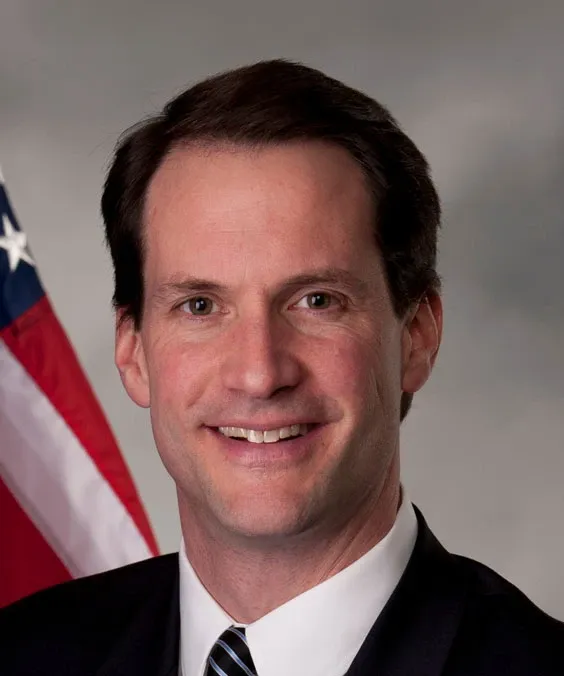
Joe Lieberman
The Public Record
Joseph Lieberman is an American politician and attorney who served as a United States Senator from Connecticut from 1989 to 2013. Initially a member of the Democratic Party, he gained national prominence as the party's nominee for Vice President in the 2000 election alongside Al Gore. After losing the election, Lieberman continued to serve in the Senate, where he became known for his centrist views and willingness to cross party lines, particularly on issues such as national security and energy policy.
Mar 14, 2002
There is the $1.7 billion shortfall, and I know that the Army put more money into this fiscal year 2003 budget.
Mar 14, 2002
Why would it not make more sense to limit modernization to fewer than the three and a third divisions in the counter-attack corps, and, again, take that money and fully fund the Objective Force?
Mar 14, 2002
So the bottom line in balancing the risk, in what I know is your desire to get to the Objective Force, you do not feel you can cut that below the six IBCTs?
Mar 14, 2002
You could probably do it with the other services, as well--that though the $48 billion increase proposed for the DOD budget is large, you can make a case to go higher than that.
Mar 14, 2002
We want to see that this is a realistic plan that does not have too much risk associated with it.
Mar 14, 2002
We know you have to take that risk, but the risk seems to be pretty much loaded on the Legacy Force, and not the modernizing.
Mar 14, 2002
I think Senator Lieberman and I--we have responsibility not just for the Army here, but other programs and other services--
Mar 14, 2002
We need to flesh this out and understand the levels of risk and what decisions are being made.
Mar 14, 2002
We support you fully and I think we have backed it up with more money from this subcommittee than from the last two administrations.
Feb 14, 2002
I assure my friend from Missouri this is not going to be a Federal invasion of the local election process. This is very much a voluntary issue, which is, if local election officials want someone living in their town, their neighbor…
Dec 6, 2001
We must work with our neighbors to establish a reverse inspection program to inspect vehicles before they have the chance to endanger or destroy important transportation infrastructure.
Dec 6, 2001
If we do not ask them, we will not close those vulnerabilities and we will be susceptible to further attack.
Dec 6, 2001
This is one of a continuing series of hearings that this Governmental Affairs Committee has held since the terrorist attacks of September 11.
Dec 6, 2001
Not since December 7, 1941, has the question of our domestic security so dominated national debate.
Dec 4, 2001
I say to Senator Murray, I would like to confirm my understanding that between the funding you have included in the conference report for the Transportation Security Administration and the funding included in the bill for the Federal…
Dec 3, 2001
I can tell the Senator respectfully, I have been here 13 years and I know it has been an issue all that time, and I know it was debated for some time before that. My point was, though, that I think some of the contentions made on the floor…
Aug 3, 2001
I also am pleased to rise to join my friend and colleague from Arizona, Senator McCain, in making this call for consideration of the development of an economy-wide cap-and-trade system to control our emissions of greenhouse gases. Senator…
Jun 11, 2001
On behalf of this amendment, which Senator Landrieu, Senator DeWine, and I have cosponsored, we have come together on a bipartisan basis on the policy in this bill to demand educational results for the children of our country.
Apr 5, 2001
I did not comment because, for me, the distinguishing factor in this amendment is the short-term economic stimulus and the particular method to achieve it, which is spelled out here, which is the substitute for the House tax bill. Those…
Apr 5, 2001
It seems to me as we deal with this budget resolution and we think about the condition of our economy and of the Federal Government books, we have a short-term need and a long-term opportunity. The long-term opportunity is to…
Politicians like Joe Lieberman